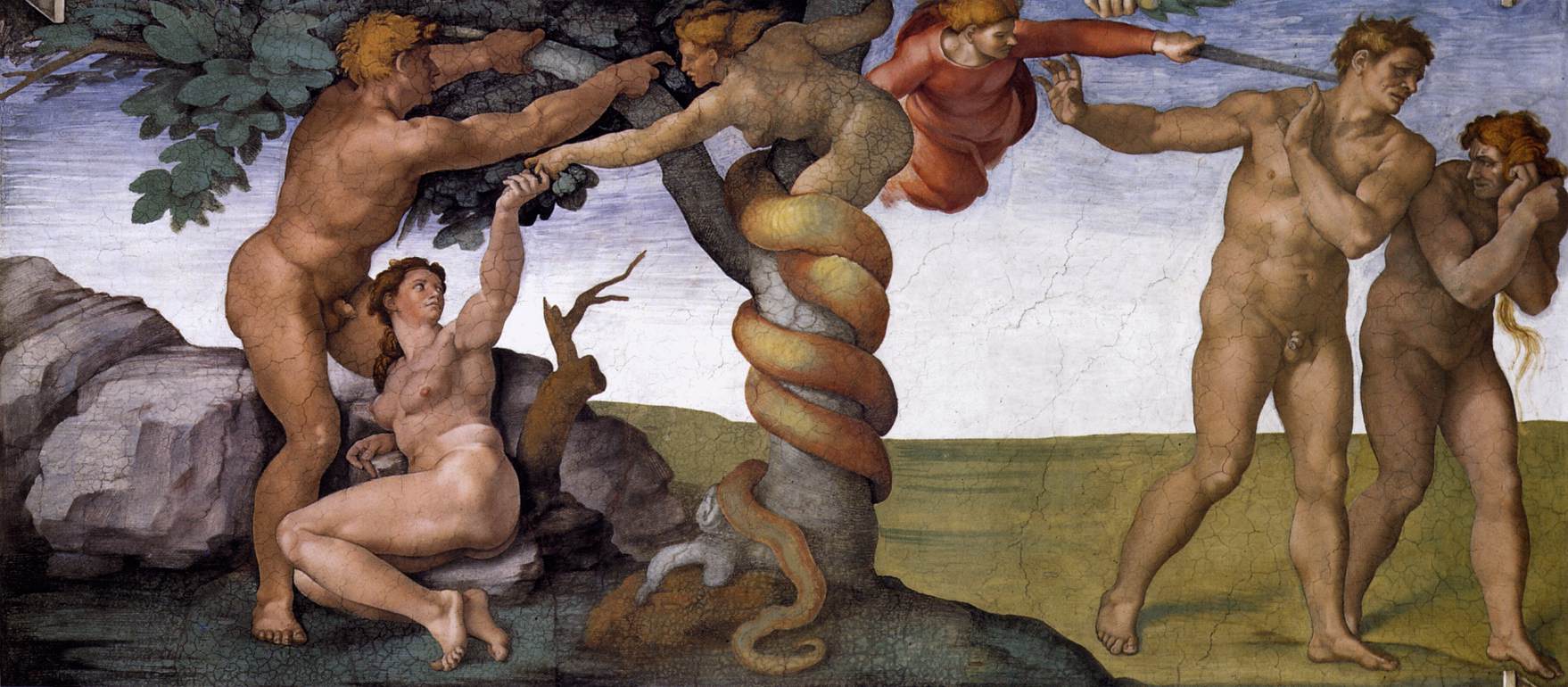
Showing posts with label Theology. Show all posts

Saturday, 2 August 2014

Some Theological Conclusions on Grace and Nature according to St Thomas Aquinas


The following theological conclusions have been recently learned by myself

Whether it is possible for man to love God, the author of nature, above all things by natural powers alone?

1) In the state of pure nature (which never existed) God is capable of attaining to an elicited love of God as the Creator by human powers alone.
2) In the state of integral nature such that Adam originally experienced, humanity also had the above capacity.
3) These two states presuppose the activity of natural concurrence on humanity to reduce potentiality to the relevant actuality.
4) In all states (possible or real) it is utterly impossible for man to obtain a love of God above all things as the author of grace.
5) This is so as each act is specified by its formal object. It is not sufficient for us to state that a supernatural object may be loved by natural powers even if there be a supernatural mode to bring it about.
6) In fallen creation man is unable to produce an affectively efficacious love for God above all things. This is so as a weak man is incapable of performing a work that pertains to the healthy.
7) Man subject to the dictates of concupiscence prefers private immediate goods to his true and lasting end. Human nature is more corrupted in respect of the appetite for good than for the attainment of knowledge. A sin against the eternal law is indirectly an offence against the natural law.
8) As human nature is not destroyed by the fall and the disappearance of integral nature, there remains in him a natural inclination towards God as creator.
9) There also exists in man a natural love for happiness which is present necessarily and can never be effaced from human nature. God here is considered as insufficiently indistinct from multifarious good objects.
10) In addition, man can possess an affective love for God as the creator by human powers alone. There is nothing more than a complacency in God's goodness and general providence according to the natural order.
11) Healing grace is absolutely necessary in fallen creation for man to fulfil evens the precepts of the natural law.

This is the doctrine of classical Thomism which contains the authentic teaching of Saint Augustine as developed by St Thomas and his devoted followers.These conclusions are supported by the Councils of Trent, Second of Orange and Milevum among others.The preceding conclusions have been taken from the Theological Summa of the Angelic Doctor, I II, q 109-114 as expounded by Rev. Reginald Garrigou-Lagrange in his treatise ''Grace''.

Tuesday, 29 July 2014

On the Eternal Procession of the Holy Ghost


A Short Lecture on Book One of the Sentences, Distinction XII, Chapter 1.

Whether the Holy Spirit proceeds first or more fully from the Father than from the Son

The following explanation is of divine faith and must be upheld by all Catholics. The very question hinges on an impermissible lack of sound understanding of the Holy Trinity, where an all too creaturely perception has undermined true comprehension (in as far as we are able) of the immanent processions.
 Saint Augustine did teach that the Holy Ghost proceeds ''principaliter'' from the Father and it is well known that the Greek Fathers preferred to stress that the Third Person proceeds per filium.Yet these profound explanations of the notional acts are not to be held as contrary to the faith as dogmatically defined by the Catholic Church.


 The Council of Florence in Laetentur Caeli (1439) decrees:

''Therefore, in the Name of the Holy Trinity, Father, Son and Holy Spirit, with the approval of this sacred universal Council of Florence, we define that this truth of faith must be believed and received by all Christians, and so all must profess that the Holy Spirit is eternally from the Father and the Son, and He has his essence and His subsistent being at once from the Father and the Son, and He proceeds eternally from both as from one principle and one spiration''.

 The careful observer will notice that the present tense is used which will enable us to cast off any notions that are based upon a creaturely mode of signification. We are not to hold that the Holy Ghost has proceeded and now remains dormant as though there was a once when He began to proceed and an instant when He received His rest. The argument raised by Peter Lombard attributed to the heretic is based on such a flawed understanding. The human mind has its proper object in the essences of created things and therefore in order to reach higher we must use analogies and similitudes in our attempts to grasp the hem of the sacred mysteries. The crux of the heretic's logic is that the Son must first proceed in order for the Holy Ghost to proceed. This needs further distinction. If we are to assert that the Son is dependent on His Father for the possession of His subsisting divine essence so that He may spirate the Holy Ghost in union as one principle with Him, we may concede. In explanation, we are not to hold any temporal notion or sense of locomotion in this immanent notional act. The Son receives the entire Divine Essence from the Father not in the passage of time but as the eternal now. There is no transition of the Son's entering into possession of the divine nature and the second notional act of spiration. It is beyond our understanding to contemplate how this marvellous generating of the Word can ''occur'' in the eternal instant but this is to be accepted in faith and love.

An impure human understanding of this will lead to the following line of argumentation. In order for the traveller to pass from milestone B to milestone C he is required to journey from A to B. We can see here that not only in there a transition in time but one that is imperfect and dependent on other factors for the man to proceed from one stage to the next. The two notional acts of generation and spiration are never to be considered thus. There is no lapse of time, there is no ''becoming'', there is no before so that there may be an after. If we are to declare a priority, this is to be held as a ''principium'' or ''arche'' at most. There can be no priority of time so that potentiality and restriction pollutes the pure act of the deity. The Father is the source of the Trinity and the Holy Ghost can only proceed from the Son because the Latter has received the perfect and complete divine nature but we are forbidden to admit of a pause. In Their possession of eternity, there is no before and after. All is sublime enjoyment of Their glory and goodness, without decay, increase or mutation.

 In conclusion, let us note the words of the Doctor of Grace:

 ''In that highest Trinity, which is God, there are no intervals of time by which it may be shown, or at least asked, whether the Son was first born of the Father, and afterwards the Holy Spirit proceeded from both of Them...Can we therefore ask whether the Holy Spirit had already proceeded from the Father when the Son was born, or whether the Spirit had not yet proceeded and, after the birth of the Son, proceeded from both? It is absolutely impossible to raise such questions where nothing is begun in time in order to be completed at a later time. And so let him who can understand the begetting of the Son from the Father outside time also understand the procession of the Holy Spirit from both outside time.''

Monday, 28 July 2014

Is God the Cause of Evil?


A Short Lecture on the Sentences - Book One, Distinction XLVI, Chapter 3
''Whether evils things are done by God's will or against His will''

It is of divine faith that we assert that nothing can come to pass unless God positively ordains it or at least permits it. One may marvel at God's providence concerning both the lowliest creature to the structuring of the galaxy but the matter of evil and God's acceptance at least of it is an opaque mystery in itself and is much more challenging for the mind to grasp.
 Like many theological issues, the Church has set out for us clear parameters to guide the study of special dogmatics to a deeper comprehension of the sacred mysteries. Our two bounderies are the following:

1) All is under the dominion of God. Nothing can escape His providence
2) God can in no way be considered the author of evil.

These two articles are irreducible and it is forbidden for the Catholic theologian of sound mind to go beyond these parameters.

All that occurs in creation can not be contrary to the will of God
Evil is evidently present in creation
Therefore God is in some way responsible for evil.

I distinguish the major. If we are to assert that nothing created can violate the decrees of divine providence, I concede. If we are to state that deficient actions as regards the deficiency are proximately caused by divine premotion, then I deny.
 Let the minor be granted.
 The conclusion is invalid due to the distinction given in the major.

 As the motor power in an animal is not responsible for the weakness in the leg causing it to limp, then neither is God responsible for the malice in the human will. It is out with the proper and adequate object of God's will to love and cause evil. The ''physical'' and ''positive'' act must be caused by God, otherwise the human will would remain totally indifferent and paralysed in potentiality. All thoughts and actions, however great or small, are subject to the divine will. God not only creates and upholds but He turns each intellect and will however He decrees. The most excellent part of man, created in the image of God, is entirely subject to Him. This is a universal truth admitting of no exception. It is also true that God can convert all wills unto Himself, purifying all deficiencies and overcoming all obstacles by His efficacious will. As the Divine Apostle says, ''Who  shall resist His will?'' (Romans, 9:9)There is no simultaneous concurrence as the Molinists assert, where God is dependent on the consent of His creatures and His will is practically equal in weight to theirs. The human will is subordinated to the divine decree which moves man to his natural end (which He intimately knows as He is the author of human nature) sweetly, powerfully and yet without violence.Why this does not occur in the majority of instances is a mystery to be revealed only to the blessed in their glory. For now, let us state with St. Augustine of Hippo, that God saw it more fitting that evil should exist so that good may come out of than that no evil should exist at all.

 God must not be seen as a benevolent passive player in the drama of human existence. We must proclaim His lordship over all creatures and all acts, instead of relegating Him to some helpful but limited anthropomorphized agent. It is in some sense good that evils are done, not in themselves as they grievously offend God, but rather they are conducive to the perseverance of the saints and the greater humility of the penitents. The experience of wickedness may turn man to God in pursuit of justice and holiness.

 In conclusion:

1) God is the Creator and sustainer of all that is.
2) All is subject to His providence and none can resist His will.
3) All that is good is positively ordained by Him.
4) What is evil, in its physical aspect is willed by Him
5) What is evil, in its deficient aspect is permitted by God for a higher purpose.

Saturday, 26 July 2014

On The Seventh Sunday After Pentecost


Being, movement and perfection are all under the dominion of the providence of God. No creature, however lowly or however magnificent can remove itself from the intimate and steady hand of Divine Providence.
 The Aristotelian philosophical principle of the real distinction between act and potency is of immense value to us and serves as a great aid to elucidating the divine motion upon all created being. No act, however insignificant can be performed without at least the natural concurrence of God. No agent is unable to rouse itself to movement without the exercise of God's motion upon their natures. Ignoring this truth would reduce all action and change to absurdity where no sufficient external causality could account for an outbreak of direction less transition without purpose. This natural concurrence is due to man's nature  and God owes it to Himself to assist nature as a whole to attain to its purpose as designed and implemented by His liberality in creating everything ex nihilo. This demonstrates that all thought, willing and acting can only be actualised by the consent and motion of God. Let us not confuse this with the higher inspiration of the Holy Ghost, or the formal participation in the divine nature of habitual grace or the transient participation in the same that is actual grace. Grave theological errors have been committed by the lack of due distinction between the orders of grace and nature. Yet gratitude should be shown for both.

 If we were to imagine the possibility of a completely natural state of creation, where Adam has no higher gift of divine life in his soul where his end is the purely nature knowledge and love of God above all things, he would still be utterly dependent upon his Creator for his being and movement. He would have all his faculties untainted by sin and the loss of original justice in grace, where these powers would be directed with rectitude to goodness. Yet after all this he would still require the assistance of God for any movement whatsoever.

 Let us then consider how much more imperative is the grace that is given for man in a fallen world to attain to holiness. We speak here not of general divine motion upon nature to reduce its potentiality to act but grace that is substantially supernatural not just modally. Without grace, the sinner may still be orientated towards universal good as his human nature is not destroyed, and he may attain to knowledge concerning the material world around him, but he is utterly incapable of raising himself beyond this. This is not to say that unfallen Adam could have elevated himself by pure will and discipline to the domain of the supernatural. The human soul has an obediential capacity to participation in the divine life which far excels the proper objects of its faculties yet is not entirely repugnant to its nature.

Oh happy fault that merited us so great a redeemer! With the School of Salamanca, I state sin was permitted by God for the greater good of the Incarnation. Slaves are to become sons and heirs too. Where sin abounded, grace abounded even more. Mercy and justice were the wounds of our Lord. Although the baptised may have entered into a formal participation in divine life (baptism being the seed of glory whose culmination is the beatific vision), the intellect is still darkened and the will remains vitiated. However, in this redeemed world, even greater helps are given to man than was available to Adam. The Holy Sacrifice of the Mass is greater than the worship in Eden. The Incarnation is far superior to when God 'walked' in the garden with our first parents. Striving through pain and vicious temptation with these magnificent supernatural graces man can attain to greater holiness than Adam possessed before his sin.Through these actual graces and the possession of sanctifying grace man comes to know his subjection to God in both the natural and the supernatural spheres and he is glad of it. He recognises the mercy and bountiful goodness that has been shown to him. He marvels not that some are damned but that any at all have been elected for glory.

 His faculties and his body are understood now to be in the service of his Redeemer and Lord. Of his own, belongs sin. To God, belongs his virtue. Even when he was astray from God, the latter was near to him. To echo Saint Augustine, that doctor of grace, God was nearer to him than he was to himself! His thoughts although at least generally moved by God was not concerned with God. By the infusion of the theological virtue of faith, he begins to view matters not in the shadow of practicality but in the light of eternity. He comes to acknowledge humbly his vast plans and triumphs are as straw being blown towards the pit.

As he journeys along the path of spirituality, he can only respond with gratitude to the saving mercy of Jesus Christ on the Cross. His labours of sanctity can never now be seen as burdensome but rather as a joy and a free offering to almighty God. O clap your hands, all ye nations: shout unto God with the voice of joy!Who is God but our Father and Protector? His past deeds disgust him and by continual actual graces he resists the curiosity to consider what his life could now be like etsi Deus non daretur. No more will he be enclosed within himself but will deny himself and serve as Christ served according to the will of the Father.

 He shall live for God as Jesus died for him. 

Wednesday, 9 October 2013

Cardinal Ratzinger on Mass Vestments


Cardinal Ratzinger makes clear in his work 'The Spirit of the Liturgy' that liturgical vestments do not express simply the splendour of creation but convey something far more profound about our condition as wayfarers and our hope of incorruptibility. 

''The liturgical attire worn by the priest during the celebration of Holy Mass should, first and foremost, make clear that he is not there as a private person, as this or that man, but stands in place of Another - Christ. What is merely private, merely individual, about him should disappear and make way for Christ. ''It is no longer I who live, but Christ who lives in me.'' (Gal. 2:20)...It is not he himself who is important, but Christ. He makes himself the instrument of Christ, acting, not from his own resources, but as the messenger, indeed as the presence, of Another - in persona Christi, as the liturgical tradition says. Liturgical vestments are a direct reminder of those texts in which St. Paul speaks of being clothed with Christ: ''For as many of you were baptised into Christ have put on Christ'' (Gal 3:27). In the epistle to the Romans, the image is connected with the opposition between two ways of living. To those who waste their lives in immoderate eating and drinking, in debauchery and licentiousness, St. Paul shows the Christian way: ''But put on the Lord Jesus Christ, and make no provision for the flesh, to gratify its desires'' (Romans 13:14). In the epistles to the Ephesians and Colossians, the same idea is interpreted in an even more fundamental way in relation to the anthropology of the new man: ''Put on the new nature, created after the likeness of God in true righteousness and holiness'' (Eph 4:24). ''You have put on the new nature, which is being renewed in knowledge after the image of its creator'' (Col 3:10f)...The goal is the inward renewal, his real assimilation to God...The image of putting on Christ is, therefore, a dynamic image, bearing on the transformation in Christ, and of the new community  that is supposed to arise from it. Vestments are a challenge to the priest to surrender himself to the dynamism of breaking out of the capsule of self and being fashioned anew by Christ and for Christ. They remind those who participate in the Mass of the new way that began with Baptism and continues with the Eucharist, the way that leads to the future world already delineated in our daily lives by the sacraments.
 In his two epistles to the Corinthians, St Paul gives further elaboration to the eschatological orientation of the image of clothing. In the first epistle he says: ''This perishable nature must put on the imperishable, and this mortal nature must put on immortality'' (15:53)...Paul describes the body of this earthly time as an ''earthly tent'', which will be taken down, and looks ahead to the house not made with human hands, ''eternal in the heavens''. He is anxious about the taking down of the tent, anxious about the ''nakedness'' in which he will then find himself. His hope is to be, not ''unclothed'', but ''further clothed'', to receive the ''heavenly house'' - the definitive body - as a new garment. The Apostle does not want to discard his body, he does not want to be bodiless. ..He does not want flight but transformation. He hopes for resurrection. Thus the theology of clothing becomes a theology of the body...The liturgical vestment carries this message in itself. It is a further clothing, not an ''unclothing'', and the liturgy guides us on the way to this ''further clothing'', on the way to the body's salvation in the risen body of Jesus Christ, which is the new ''house not made with hands, eternal in the heavens (2 Cor 5:1)''

Theological Shorts 3 - What is Evil?

The following article is taken from St. Thomas Aquinas' Compendium of Theology. I will be focussing on his section under the heading 'Faith', 115-122.

 This Theological Short is more properly philosophical as it follows a process of human reasoning alone which is open to each man whether he knows of, or accepts Christian revelation. As I taught in the previous Theological Short, certain truths available to the enquiring human mind are also revealed to us in order to safeguard us from error. Some of the truths that I will lay out here can be obtained from revelation as they consider the inherent goodness of creation which has been communicated to us from above.

 First of all it is necessary for us to realise that we do not consider evil to be a nature, a reality in its own right. We do not acknowledge a principle of evil or of darkness which exists co-eternally with
goodness, such as the Gnostics taught. We reject the possibility of a Supreme Evil existing as a counterpart to the Supreme Good. This will be shown in the following line of philosophical enquiry. The Angelic Doctor notes that a nature, a thing, a substance is either a potentiality or an actuality, what could be or what currently is. The former seeks to become perfect, that is, to become actual. All things by nature seek good properly understood. We here do not speak of, simply, moral good, but the perfection belonging to a thing as a particular thing. As something shares in actuality it shares in goodness (a perfection), that is, being considered under the aspect of desirability. To mix in a contrary, in this case, 'evil' does not lead a thing to a new perfection but rather it suffers a defect. To understand this point it is vital to realise the significance of the truth outlined above that evil is not a nature. What is produced by this unhappy mixture is not a new positive form (although it does receive a new form) but the devastation, the corruption, the corrosion of a perfection. As things seek their own good and perfection, wishing to remain secure in it, they also wish (by nature, not simply voluntarily) to avoid what destroys it. Existence itself, an actuality in the mode of being, is itself a good which 'all things desire, sharing in good perfects every nature''.

 We define genus as a class of beings, it is 'what something is'. Further we define species as 'what sort of thing it is'. Thomas asserts that the particular species is determined by a thing's form. Therefore, in the case of a moral agent (a man or an angel), the moral species, derived from their form, is obtained from the end sought out by their will.
 In natural objects or beings, the corruption of one form is related to the reception of another form. The Angelic Doctor uses the example of fire and its effect on wood. What occurs when fire touches wood is that the wood itself suffers deformation, it is warped, ultimately it loses a perfection it previously possessed. The agency of fire, a good in itself, when in contact with wood causes the latter to lose its integrity and perfection.

 As regards moral agents, we consider it to be an evil for them to seek out an end which is defective, one that is removed from a necessary perfection. Evil here derives from the privation rather than merely the object sought itself. We are told that good and evil are specific differences which distinguish a class of moral beings. 'What is perfect always belongs to the nature of good, and what is lesser always belongs to the nature of evil'.

We can not state entirely correctly that evil exists. What we truly mean is that we believe (created) good can be corrupted, that its perfection can be destroyed. It is itself in the nature of created things to be liable to such negative change, not because of an inherent defect in their creation but by the very fact of their being brought into existence out of nothing. This possibility arises from its nature's potentiality. They are contingent beings that require an agent in act to bring them into existence and to sustain them in it. This last mention of creatio ex nihilo is properly theological as it cannot be proven by human reason alone that we were created out of nothing.

 A particularly good analogy of how evil is a corruption of a perfection of a good is shown by the example of blindness. The proper object of sight is colour, however due to blindness, the thing is incapable of activating fully this sense. Blindness can occur to various degrees, that is, to a deepening level of damage or diminishing of a perfection. The eye itself, although terribly impeded in its proper function, still remains good in its nature. 'Both form and potentiality for form are good, and a potentiality is the subject of privation, just as it is the subject of a form'. The subject in which it adheres is 'necessarily good, not that is is contrary to evil, but that it is a potentiality regarding evil'.

 We must underline here that not every good, as I have implicitly stated above, can be susceptible to evil. Only those beings which may lose a perfection can. For God we must not admit the presence of evil or even the potentiality of evil as He is said to be pure act, incapable of change as this would imply imperfection, whether this be the capacity to develop perfection or the ability to be deprived of it.

 Thomas goes on to remark that an evil as a privation can not be desired in itself (only per accidens) but only inasmuch as it connected to a certain good. However we may consider this point more fully in a later article.

 Evil must be found in a particular good, it can not exist on its own. It is to be found in good as in its subject. Privation can only be found in a being and as such it must inhere in a good. We say that evil is found in something in the same sense as we say blindness is found in an eye, or more precisely 'in the subject of the power of sight'.

It is now necessary to move on to distinguish the various senses of the term 'evil' that we have been using. Usually in common speak we would define it as some outrageous act such as murder or rape, but we should not be limited to particular instances of moral evil. The key point in this article is that evil is a defect or a privation, a reduction in a subject's perfection or goodness. We may mean this in two ways, 1) its nature or 2) its operation, such as its movement towards its desired end. In the first case we can mean the aforementioned example of blindness and for the second we can speak of limping as an impediment in the operation of walking, an action which suffers from a defect. As regards moral evil, this can only be produced by a conscious and active moral agent who knows what it is doing. Its voluntary nature is essential. A forced act which is imposed from outwith such as rape does not constitute fornication or adultery. Thomas also notes that an action done out of ignorance does not count as a voluntary act as the agent is not aware of the things of which the said action consists. If a defect is done consciously by an active moral agent we speak of sin and the agent deserves punishment. 
Finally we consider evil that has the nature of punishment. The removal of a good can be imposed on a moral agent against their will in order to serve as a remedy for sin and to alter the deficient will for disordered actions. This is in itself actually a good as it hopefully brings the will to a state of justice by making punishment more unpleasant than the desire for illicit action.


Tuesday, 1 October 2013

Theological Shorts 2 - The Necessity of Theology

Today's theological short is taken from the Summa Theologica, Part 1, Question 1, Article 1.

Whether besides Philosophy, Any Further Doctrine is Required?
Saint Thomas answers in the affirmative. Let us proceed along a line of argumentation to consider the boundaries and limits of both philosophy and theology. Objection 1 remarks that we must not go beyond what man is capable of. It is certainly true that the proper object of the human intellect is the essences of sensible beings. Human knowledge is said properly to be 'rational', in comparison we say that the knowledge of the angels and most eminently of God is 'intellectual'. For human beings, reason is a perfection, a quality that is essential to man, in fact it is what distinguishes man as a species from his wider genus of animal. As reasoning beings we proceed from what we know to what we are ignorant of. This is a process of imperfect knowledge, often uncertain, towards a firm grasp of truth. It is clear here that we must not ascribe this process to God as it would attribute imperfection and ignorance to Him. There is much stumbling and darkness along this path which the Angelic Doctor highlights later on in the article.
 Human beings are utterly dependant on experience to gain knowledge as it is through the senses that we come to develop an understanding of the world around us, the particulars, but also to reach a comprehension of universals. Not being angels we are unable to grasp conclusions inherent in principles, but we must proceed step by step to arrive at an end point. We may even be wrong in our destination. For the Catholic there must be no disparaging of creation as our faculties are attuned to them to arrive at knowledge. This pertains to philosophy.
 However, is it not true that philosophy does treat of God? Without a doubt. Does that mean that there is no requirement of different disciplines? Absolutely not. The justification for this negative is that theology considers God under a different light from philosophy. The material object of both sciences is God, however it is the formal object that distinguishes all disciplines. Saint Thomas remarks that both the physicist and the astronomer may reach the conclusion that the Earth is round (N.B. He wrote this in the 13th century!!!), but it is under different aspects or methods that this truth is reached. Let us apply this to philosophy and theology. Philosophy reaches a knowledge of God, such as the certainty that He exists, but this is obtained through a process of reasoning, a movement from effect to cause. Theology treats God under the formal aspect of revelation. It is founded upon the authority and certainty of God, the revealer of Himself. There are many truths that man can not apprehend by reason alone which God must show us so that we may come to know it, eg, the Incarnation, the Trinitarian nature of the Deity etc. As a corollary, supernatural mysteries can not be proven intrinsically, objections to them may be shown to be unconvincing but reason alone can not show definitively their truth value. We may know that God is, but not what He is. We 'know' the articles of revelation through Divine Faith. This surpasses the proper object of our intellects.
 The Angelic Doctor remarks that revelation is for our salvation. God even reveals truths that could have been obtained through human reason alone, such as His existence. In His gracious mercy He has revealed them to us so that our reason processes which have to cope with 'an admixture of many errors' may not condemn us entirely. Our eye must be directed to God, our end but this end surpasses our reasoning capacities. Human beings make errors in thought through tiredness, inexperience, logical fallacies, the darkening of the intellect or the inclination to sin itself. It is for our own good and His glory that God willed to reveal Himself.

We conclude that theology is a necessary discipline that is formally distinct from philosophy.

Wednesday, 28 August 2013

The Fathers Speak


St. Prosper of Aquitaine.

Thus human nature, vitiated in the first man's sin, is always inclined, even when surrounded by God's mercies, with His precepts and aids, towards a degenerate will, to surrender to which means sin. This will, then, is unsettled, uncertain, unsteadfast, unwise, weak to accomplish, quick to risk, blind in desire, conceited when honoured, agitated with cares, restless with suspicions, more desirous of glory than of virtue, more solicitous of a good reputation than of a good conscience, and through all its experience still more unhappy when enjoying what is coveted than when deprived of it. It has of its own nothing but a readiness to fall; for a fickle will which is not ruled by the changeless will of God, runs the more quickly into sin the more keenly it is bent on action. 

Saturday, 24 August 2013

Theological Shorts


A new feature here at Filioque where a few times a week I will write a very short commentary on a particular article of the Summa Theologica from Saint Thomas Aquinas.

The first summary is taken from Part I, Question 95, Article 1.


'Whether the first man was created in grace?'

Thomas answers in the positive, the first man was created in grace by God. The reason the Angelic Doctor gives for this is that the Adam was created in complete rectitude, where his body was subjected to his reason and his reason was ultimately in harmony with his creator, 'God made man right' (Eccles. vii. 30). This state of rightly ordered reason could only occur with the first man being in a state of grace, as ''it is clear that such a subjection of the body to the soul and of the lower powers to reason was not from nature; otherwise it would have remained after sin.'' This statement is vital for a correct understanding of our state after the Fall. The Pelagians believed that Adam was created in a natural state, a state in which death and decay was a reality and would come to affect our forefather in due course. But the Catholic proclaims the initial rectitude, the original righteousness of man, which existed because of the presence of grace in his soul. The withdrawal of his great state was due simply to the deliberate sin of  Adam, a sin for which he could claim no excuse due to any stain of concupiscence. This is necessary as otherwise man's original nature would have been faulty if we were to answer in the negative. Saint Augustine commented that because of man's disobedience to God he began to feel that same disobedience in his own flesh. With the removal of grace, the flight of our original duly ordered nature, the lower powers of man started to rise up against him, provoking him, taunting him about his most terrible fall from his initial, God-given righteousness.
 It must be stated that the grace given to man was not an efficacious grace in the moment of his temptation, whereby man would have, by the power of God moving swiftly and sweetly, rejected the offer of Satan to sin. Grace was certainly given to man to overcome, but the flowering of the bud was crushed by his rejection of it. Adam could claim no excuse, no human weakness for his abandonment of his creator.

REPOST: The Grace to Pray


I wish to write a short clarification about a matter that annoys me terribly that I have heard or read recently a few times. I would be unwilling to attribute this grave error to heresy, but simply as laxity in theology or lack of due diligence in speech and word.
Too often people will state that God would grant man grace if he were to will it, or that you should pray and God will then come and assist you. The first part is erroneous and the second is ambiguous.
No man can will or do anything truly good without the grace enabling him to carry it out, which as the term 'grace' signifies, is freely given without any consideration of our merits. The divine will is not forced into acting because we have done something worthy of reward independent of His vital assistance. As Saint Augustine states in the Perseverance of the Saints, such a case would be not be 'grace', but the due bestowal of a reward for a work.

Saint Thomas elaborates on this matter in considering the meritorious nature of true prayer:

''...like any other virtuous act, is efficacious in meriting, because it proceeds from charity as its root, the proper object of which is the eternal good that we merit to enjoy. Yet prayer proceeds from charity....As to its efficacy in impetrating, prayer derives this from the grace of God to Whom we pray, and Who instigates us to pray. Wherefore Augustine says, He would not urge us to ask, unless He were willing to give; and Chrysostom (Thomas attributes this text to him, not found in his corpus currently) says: He never refuses to grant our prayers since in His loving-kindness He urged us not to faint in praying. Neither prayer nor any other virtuous act is meritorious without sanctifying grace. And yet even that prayer which impetrates sanctifying grace proceeds from some grace, as from a gratuitous gift, since the very act of praying is a gift of God, as Augustine states.'' II-II Q83, A16.
In addition as Fr. Garrigou-Lagrange at pains to emphasis in his wonderful work, 'Providence', states, the principle of merit is not itself merited. Sanctifying grace is normally infused at Baptism, where we are plunged into the death of Christ and made a new creation, both of which we have no natural right to. All is of grace and mercy.

''Let us therefore love God, because God first hath loved us.'' (I John 4:19)

REPOST: The Fallacy of the Opposition and the Credo of the Scientist


I plan to repost certain key articles as some of my main work is buried beneath a pile of aphorisms....


The Fallacy of the Opposition and the Credo of the Scientist

One can no more argue that science has disproved the existence of God any more than one can claim that the conjugation of the French verb pouvoir destroys the theory of evolution.


It could be claimed that the great fallacy of our times is that of the opposition between the natural sciences and that of the existence of God. As I have written on this blog recently, one must follow the discipline and methods of a particular branch of knowledge faithfully to arrive at a true solution. If one strays, as often too many will do in these times, the very integrity of the science is not just brought into dispute, in fact it is annihilated.
The natural sciences can only interact with and cover what can be empirically verified, submitted to close scrutiny and repeated with due care. It deals with matter however great or small and certain forces that act upon it which can be tested. To wish to extend this method to other branches of knowledge is absurd. Dawkins and his cult may wish for this scientific approach to be extended to other areas but by doing this they destroy everything else. Not only does the existence of God cast out of the window, but out goes with it literature, poetry, architecture, beauty.....and morality. It is inconsistent with his principles and protests to claim that a particular incident in the history of the Church is evil, as he is overstepped his self-imposed boundaries.
It is by respecting the methods of natural science that advances are made. To twist them for a certain personal purpose is to ruin it's purpose and true glory.
Yet, it must be noted that the scientist must have a creed, a profound belief before he can set to work. He must believe that the phenomena that appears to surround him is in fact real, that it can be interacted with, and when it yields it's secrets, it does so consistently. He has to believe with great commitment that the results are worth having. If he believes that a particular result may fluctuate from a certain second on a Tuesday in California to something else in Toledo, he can not unearth a universal law .If he does not passionately believe in the consistence of the universe, he has no reason to commence the process. The validity of what surrounds us and the fact that it is orderly underpins all that he attempts to do. He must passionately believe this. You can not uncover this reality by working but it must proceed the work itself. The scientist must be dogmatic before he can be open-minded. It must be noted that such a belief is far more in harmony with Christianity than it is with atheism.
No, you will never find God in science. He is not there at least according to an orthodox 'description' of His being. If one uncovered God in science, it would be an idol. Many men who happen to be scientists may believe in God with the assistance of their discipline, but only by moving beyond it to consider it's true foundation.

Tuesday, 21 June 2011

The Interelatedness of the Trinity - A Case of the Absent Father

One of the gravest dangers in theology can be a one-sided emphasis which results in a distortion of the whole. We must admit that the splendid and marvellous nature of our Catholic religion invites us to a deeper understanding in faith and charity of the Sacred Mysteries revealed virtually. One could never tell enough the glories of the Incarnation and Redemption, the ineffable procession of the Son from the Father and the spiration of the Holy Ghost, yet at times it would be hazardous to describe any further. Often it is more in keeping with due reverence to fall silent at the Mystery. However, this truth can never be a pretense for laxity in theology.
 I heard in a homily on Sunday that it is a current tendency to neglect the Person of the Father in favour of the Son and/or the Holy Ghost. Sadly, without the Person of the Father, Christ is reduced to a teacher and the Holy Ghost to a impersonal force which has a certain proclivity to conform to liberal opinion.
 Let us deal in this short article with the ''Fatherless Son'':

 Although Christ is true God, fully possessing the divine nature and the perfections eminently and formally, He can never be considered apart from the Father. He is 'God from God' and 'consubstantial with the Father', the perfect image of the Unbegotten and His Word. The Father of Orthodoxy, Saint Athanasius and the Fathers of the Council of Nicea fought for this truth and interrelatedness of the First and Second Divine Persons and would not compromise on the term, 'homoousios' which caused outrage to heretics. We do not have a case of three Gods existing side by side or apart in anyway. There is only a very minor, virtual distinction between the Persons and the divine nature which Each fully possesses.
 Man has labelled Christ many things, a teacher, a radical, a socialist, a feminist, a good and kind soul. However, no one who claims to be equal to the Father and sent by Him can be reduced to these categories. One must confess Jesus Christ as God or a lunatic. There is no middle ground. Our Divine Lord is at pains to express in the Sacred Gospels that He has come forth from the Father and to the Same He will return. His message and preaching is not His own but belongs to the One Who sent Him to bear the sins of many. The souls that are drawn to the Christ are drawn by the Father and whoever sees Him, sees His Father.
 If we refuse to acknowledge this essential element of our Lord's Person and His redemptive mission, we reduce Him to the same level as Socrates, Buddha or any one of the legion of self-proclaimed enlightened figures of our fickle generation. Such a person could not save. He would remain on our level not through setting aside glory, but as one who belongs to us by nature. 
 Our God wills something greater for mankind. It is only in the One Sent that man can approach the Father. It is only through the Body that sinners may receive life. In the end, the Kingdom will be turned over to the Father and all will be subject to His dominion. Christ uniqueness stems from His deriving His hypostasis from the Father which makes the Incarnation possible and fruitful for the salvation of many.  We can only come to be sons of the Father by grace and participation through Him Who is Son by nature and according to essence.

Against the Faith Movement: With the Assistance of Fr. Garrigou-Lagrange


In ''Reality - A Thomistic Synthesis'', the Dominican writes thus in opposition to the false opinion of Scotus:

''Scotus, on the contrary, maintains that, even if Adam had not sinned, the Word would still have become incarnate. But, since He would not have come to atone for sin, He would not have a human nature subject to pain and death. Suarez, seeking a middle ground, says that the Word became incarnate equally for the redemption of man and for the manifestation of God's goodness. By the adverb "equally" he understands that these two motives are coordinated, as being two chief purposes, each equal to the other, whereas Thomists hold that the ultimate purpose of the Incarnation was indeed to manifest God's goodness, but that the proximate purpose was man's redemption.
Against the Scotist view Thomists use the following argument. Divine decrees are of two kinds: one efficacious and absolute, the other inefficacious and conditional. The latter is concerned with the thing to be realized taken in itself, abstracting from all actual circumstance. Thus, for example, God wills the salvation of all men. But, in fact, God permits final impenitence in a sinner (e. g.: Judas) as manifestation of infinite justice. Efficacious decrees on the contrary are concerned with the thing to be realized taken with all its concrete circumstances of place and time. Hence these decrees are immutable and infallible. Now the present efficacious decree extends to the concrete circumstance of the passibility of our Savior's humanity. And Scotists themselves concede that the union between divine nature and human nature subject to passibility presupposes Adam's sin.
This reasoning, which Thomists hold to be irrefutable, supposes that the last end of the Incarnation is to manifest the divine goodness by way of redemption, redemption being efficaciously decreed as subordinated to this manifestation. Thus proposed, the argument concludes against both Suarez and Scotus. For us men and for our salvation, says the Council of Nicaea, He came down from heaven. Had man not sinned, the Son of man had not come, says tradition. Scotus and Suarez would reword this sentence. They say: Had man not sinned, the Son of man would still have come, but not in a "passible" humanity. By such restatement the assertion of the Fathers, taken simply as it stands, would be false. To illustrate, it would be false to say that Christ is not really in heaven and in the Eucharist, though He is not in either place in a passible humanity.
Scotus brings another difficulty. A wise man, he says, wills first the end, then the means in proportion to their nearness to that end. Thus he transfers the subordination in question from the order of different acts of the divine will to the order of different objects of those acts. Then he continues: Now Christ, being more perfect, is nearer the last end of the universe than is Adam. Hence God, to reveal His goodness, chose first the incarnation of the Word, before Adam was willed, and hence before his sin had been committed.
In answer to this objection, many Thomists, following Cajetan, distinguish the final cause from the material cause. To illustrate. In the order of final causality God wills, first the soul, secondly the body for the sake of the soul. But in the order of material causality He wills first the body, as being the material cause to be perfected by the soul, and the soul is created only when the embryo is sufficiently disposed to receive the soul.
Applying this distinction to the Incarnation, God wills, under final causality, the redemptive Incarnation before He wills to permit Adam's sin, conceived as possible. But in the order of material causality, He permits first the sin of Adam, as something to be turned into a higher good. Similarly, in the order of beatitude, beatitude itself is the final cause and man is the material cause, the subject, which receives beatitude.
This distinction is not idle, verbal, or fictitious. It is founded on the nature of things. Causes have mutual priority, each in its own order: form before matter, matter before form. If Adam had not sinned, if the human race were not there to be redeemed, the Word would not have become incarnate. That is the order of material causality. But in the order of finality, God permitted original sin in view of some higher good, which good we, after the Incarnation, know to be an incarnation universally redemptive.''

Monday, 13 June 2011

Pentecost - A Pneumatologically Conditioned Christology.

It is a deficiency in much theology when one considers the Person of the Holy Ghost and His operations. Too often He is seen as a mere auxiliary, as one who assists in some indefinite way in our Christian pilgrimage. How can we correct this view? How can we truly appreciate the infusion of the Holy Ghost without viewing Him as an afterthought? One will often hear something said of discernment, ''...with the help of the Holy Ghost', but what is this help and how essential is He to the oneness of God and the salvific will of God? I will not attempt to answer all of these questions as they are certainly above my ability but I would like to refer to some of the insights of an Eastern Orthodox theologian, the Metropolitan John (Zizioulas) of Pergamon on this crucial matter.

In the Creed it must be seen that the Third Person of the Holy Trinity should never be considered as an optional extra or a name to be inserted out of a certain form of piety. We sing each Sunday while kneeling, 'et Incarnatus est de Spiritu Sancto ex Maria Virgine: et homo factus est'. The Oblation of our Redemption could not occur unless the Logos united Himself with a human nature so that He could offer Himself as a propitiation for our sins. This is the key point of our Faith. In other religions, man raises himself up by his own will through his own energy often through some form of 'purification'. On the other hand, the beauty of the Christian Faith is that the Son of the Eternal Father descended out of love to dwell amongst us as man by the power and work of the Holy Ghost. By the work of the Holy Ghost. It was the same Paraclete that overshadowed the Holy Virgin so that she may conceive and bring forth the holiest of all fruit, Jesus, that fell upon the disciples on the day of Pentecost.
His Excellency states in this respect that Christ is conditioned 'Pneumatologically', and that this is absolutely essential to His becoming man. According to this theologian, Jesus Christ is inconceivable as an individual by is ontologically relational. In first place, He is the only-begotten Son of the Father, and without this filiation the Father could not be Father. He descended not as an individual but with a body, a body that was to unite the dispersed people so that they may become holy. He came with one intention, for our sanctification in obedience to the Father's will.
So how is man, once redeemed by the shedding of the blood of the Lamb, to be united to this propitiatory offering? Through Holy Baptism, the ''individual'' (as opposed to person in Zizioulas' thought) enters into and shares the Son's essential relation to the Father existentially. Yet, this laver of regeneration can only occur by the work of the Holy Ghost. It was through Him that the world began to be renewed by His overshadowing of the Woman, it was He that led Jesus into the desert to prepare for His ministry and redemptive work and it was in He that Christ offered Himself on the Cross to the Unbegotten One. Our baptism is by water and the Spirit. Not by water alone. But the Spirit presupposes the blood and the blood presupposes the Spirit. In fact, they are simultaneous. Christ dwells in our hearts by faith with the Father and the Paraclete. We are temples of the Holy Ghost. There can be no opposition.

In the life of the Blessed Trinity considered apart from creation, the Holy Ghost precedes (primarily/principaliter) from the Father through the Son. There is a one-ness in the immanent Trinity and this is manifested in the work of the economic Trinity. It is absolutely true that the redemption, regardless of appropriation, is conducted in common. The Three Persons act.

How then does this relate to Pentecost? It is certain that on this solemn day we celebrate the Birthday of the Church. By the appearance of the tongues of fire, the Apostles depart with a firm conviction and a new awareness of the uniqueness of the Person of their Saviour and His divine mission. This only occurs because of the illumination of the Holy Ghost. Apart from Him, Jesus can only be regarded as an individual from the past, someone subject to historical constraints and prejudices. This is entirely false. If the Third Person were not to be shed above the disciples gathered in prayer, how could we possibly reach the one that had ascended to the Father?
While Christ instituted the Church, we may say truly that she is constituted by the Holy Ghost.

In conjunction with this truth there can be no discord between the spirit and the institution. Amt und (oder?) Geist can never enter into our consideration of the Church and the world. Just as the doctrine of Christ is not His own by that of the Father, so the Holy Ghost only reveals what He has heard from the Father. The unity of the Godhead consists in the Monarchia of the Unbegotten. That same Spirit is not a liberator considered apart from Christ (the institution-maker) but is sent by the Son to convince the world of sin, justice and judgment. He has the same mission as the Son, as 'One sent', ''He shall glorify Me (Jesus): because He shall receive of Mine and shall show it to you.''

Therefore in accordance with the words of the Saviour, we must continue to rejoice in that same Spirit Who is building up the Body of Christ unto the fullness of the man. He still works in souls to unite them to the Death of the Lord so that we may be taken up to the dignity of sons of God in the Holy Ghost. There is no other name in heaven or earth that man can be saved under except Christ and no one can proclaim Christ is Lord apart from in the Holy Ghost.

Friday, 10 June 2011

A Definition of Eternity

From Boethius:

''The simultaneously-whole and perfect possession of interminable life''

Commentary from Fr. Reginald Garrigou-Lagrange, O.P. :

'We must come to the knowledge of eternity by means of time. But time is but the numbering of movement by before and after. Contrary to this, in the duration of that which is without movement, there is absolute uniformity, without any before or after. Moreover, what is absolutely immutable is interminable, without beginning and end, whereas those things that are measured by time have a beginning and an end. Contrary to this, our life is not simultaneously whole, for it consists of the distinct periods of infancy, youth.... (etc). Hence the now of time is the current now between the past and the future, so that past and future do not actually exist but exist only in the mind, whereas the now of eternity is a standing now, which is absolutely permanent and immobile...''

Thursday, 9 June 2011

The Ascension of the Lord - With St. Thomas Aquinas.


S.T. Pt. III. Q57, A1.

We must in this short article reflect upon the fittingness of our Lord's Ascension.
Since the humanity assumed by Christ had passed into incorruptibility as a result of His true Resurrection from the dead and that the Godhead remained perfect as it always was, how is it apt that our Lord should undergo movement into Heaven when He had nothing lacking here below? In this movement, nothing possibly could be gained as He was (and still is) truly God consubstantial with the Father and in His human soul delights in the beatific vision in the highest degree for a created nature. Furthermore, would it not be for our benefit that He remain to console the Apostles with His physical and sensible perceptible appearance, performing miracles and wonders to convert the whole Empire?


I must allow the Angelic Doctor to comment on this mystery:

''The place ought to be in keeping with what is contained therein. Now by His Resurrection Christ entered upon an immortal and incorruptible life. But whereas our dwelling place is one of generation and corruption, the heavenly place is one of incorruption. And consequently it was not fitting that Christ should remain upon earth after the Resurrection (after confirming His true triumph over death); but it was fitting that He should ascend to heaven''

And:

''By ascending into heaven Christ acquired no addition to His essential glory either in body or in soul: nevertheless He did acquire something as to the fittingness of place, which pertains to the well-being of glory: not that His body acquired anything from a heavenly body by way of perfection; but merely out of a certain fittingness. Now this in a measure belonged to His glory; and He had a certain kind of joy for some fittingness. not indeed that He then began to derive joy from it when He ascended into heaven, but that He rejoiced thereat in a new way, as at a thing completed...''

He states then that the Ascension of our Lord was to our benefit as:

1) It increases our faith in invisible reality. From the right-hand side of the Father He will send the Holy Ghost to convince the world of sin and justice and judgement.
2) Uplifts our hope. The end of human life is to rejoice in the Trinitarian communion of life and love in eternity. One can not establish a paradise upon earth, a place of corruption.
3) To direct our charity to things in the heavenly places. It is where Christ is that we must long to be and the Paraclete, the best gift of God above inflames our breast with a constant love of what truly is.

These truths are admirably exposed in the collects of the Mass for this period. For instance:

''..our Redeemer, to have ascended on this day into heaven, may also ourselves dwell in mind amid heavenly things.' (Mass for the Ascension of our Lord)

''grant to Thy people the grace to love what Thou dost command and to desire what Thou dost promise, that amid the changes of the world, our hearts may there be fixed where true joys are to be found''. (Fourth Sunday after Easter)

Let nothing during this pilgrimage distract us from the only end of human life. Once we come to realise the marvels of our Divine Lord's promise, how can we walk away untouched by His mercy?

Vado ad eum qui misit me: sed quia haec locutus sum vobis, tristitia implevit cor vestrum.

Saturday, 1 January 2011

Furthermore...

Although in the closest union possible to the most eminent degree, the human soul of Christ, remained a creature. It was not consumed or drowned by the divine but was and still is distinct from the eternal nature of the Logos however one. No ontological alteration occurred, neither is it possible.
The assumed human soul certainly from the first instant of the Incarnation viewed the divine essence in the highest degree possible for a creature, yet did not see as God sees or as God knows. It remains within the bounds of a creature.

Friday, 31 December 2010

The Grace to Pray


I wish to write a short clarification about a matter that annoys me terribly that I have heard or read recently a few times. I would be unwilling to attribute this grave error to heresy, but simply as laxity in theology or lack of due diligence in speech and word.
Too often people will state that God would grant man grace if he were to will it, or that you should pray and God will then come and assist you. The first part is erroneous and the second is ambiguous.
No man can will or do anything truly good without the grace enabling him to carry it out, which as the term 'grace' signifies, is freely given without any consideration of our merits. The divine will is not forced into acting because we have done something worthy of reward independent of His vital assistance. As Saint Augustine states in the Perseverance of the Saints, such a case would be not be 'grace', but the due bestowal of a reward for a work.

Saint Thomas elaborates on this matter in considering the meritorious nature of true prayer:

''...like any other virtuous act, is efficacious in meriting, because it proceeds from charity as its root, the proper object of which is the eternal good that we merit to enjoy. Yet prayer proceeds from charity....As to its efficacy in impetrating, prayer derives this from the grace of God to Whom we pray, and Who instigates us to pray. Wherefore Augustine says, He would not urge us to ask, unless He were willing to give; and Chrysostom (Thomas attributes this text to him, not found in his corpus currently) says: He never refuses to grant our prayers since in His loving-kindness He urged us not to faint in praying. Neither prayer nor any other virtuous act is meritorious without sanctifying grace. And yet even that prayer which impetrates sanctifying grace proceeds from some grace, as from a gratuitous gift, since the very act of praying is a gift of God, as Augustine states.'' II-II Q83, A16.

In addition as Fr. Garrigou-Lagrange at pains to emphasis in his wonderful work, 'Providence', states, the principle of merit is not itself merited. Sanctifying grace is normally infused at Baptism, where we are plunged into the death of Christ and made a new creation, both of which we have no natural right to. All is of grace and mercy.

''Let us therefore love God, because God first hath loved us.'' (I John 4:19)

Against the Faith Movement 1

I believed erroneously that this fanciful theory of the Scotists and supported by the Faith Movement would play no more part on this blog, concerning the Incarnation of the Logos irrespective if man had sinned or not. Having been 'assured' that their position is more than pure unjustified speculation about a hypothetical situation, but rather concerns the eternal plan of God, which they dare to presume to have knowledge of even thought it has not been publicly revealed to man, I must write more. It is my plan now to critique some articles written by the Faith Movement's founder, Fr. Edward Holloway to highlight certain fallacies and mistakes in his thinking on this question, yet extracting what is truly good about some of his beliefs.
I take the first article titled, 'The Son of Man: A Meditation Upon Psalm 8' which was the editorial in their magazine for July/August 1983.

In a recent discussion, where my interlocutor was visibly annoyed by my intransigence, it was mentioned that matter was not superfluous in the plan of God, and Holloway states, 'for matter is not meaningless if it too can be brought near to the Divine through the flesh of the Word made flesh'. After all 'Christ, the Eternal Word of the Father, holds the primacy over all things, because in Him they were all decreed and created. In Him they all cohere together in unity like a great equation of life and being'. However pious this sounds, and it certainly comes from the Sacred Scriptures, especially from Saint Paul's letter to the Ephesians, yet there is a fundamental problem with his application of it. In Hebrews 1:2, it is stated that through Jesus Christ, God created the universe. Now, we know that the initial act of creation must occur with time and not in time, consequently there is no before or after with God, Who abides in eternal bliss in the ever-present now Who sees all things at a glance. Therefore when it states that the cosmos was created through Jesus Christ, it can only mean through the Word (Who before the Incarnation in time, was pure spirit), who is the same Person Who descended to earth as Jesus Christ according to His assumed humanity. It refers to the hypostasis, the subsistent reality of the Second Person, as through Whom all things were made. Furthermore, as God the Eternal Father knows Himself and accordingly His effects through the Word, it is through that same Word that man comes to know God. As this eternally existing Logos, along with the Father and the Spirit, He Who Is, man can come to know God intimately, passing to the stage of perfection steadily. If man had overcome the trial of Satan in the Garden, man's love for God would have been manifested, even though in a wonderful condition, he would have joyfully and gratefully accepted his state under God in justice. I believe it was 'necessary' for a trial to be placed before man. This was certainly fitting and God the Just One permitted Satan, who exists still under the sway of the Logos to tempt our first parents. It is according to the nature of man to be man.
Along with Saint Anselm of Canterbury, I state that the only barrier to entry into Heaven and the Blessed Vision of the divine essence is our state of sin. He writes, 'The remission of sins, therefore, is something absolutely necessary for man, so that he may arrive at blessed happiness'. Anything else that the Christ came for such as to teach, or to rule concern our absolution from sin, while correcting our waywardness, illuminating our darkened intellect, and healing our vitiated will, is connected with our fall from the original position of union (yet short of that hoped for in eternity) with God.
Let us return to his statement that matter is not trivial in the creation of God, as he rightly notes that man is a substantial unity of body and soul. It is of the Faith that man's corporal nature will not simply be discarded as a mistake or an irretrievable or failed experiment on the part of God. At the end of time, the same flesh will take on a spiritual quality to reflect and mirror the soul which will shine through in an unspeakable fashion and at the same time, the flesh will find its fulfilment.
To a priest yesterday evening I stated that the Incarnation without sin, although a lovely thought, would be unnecessary, as there nothing inadequate in the creation of the first man. Certainly a movement is required with respect to man, a progress in union with God, but that is according to his nature although a divine gift. When I say 'according to his nature', I refer not to the inherent capability of man who has a right to it, but rather as God is His only end and fulfilment, for Whom he was only created. Even though the Word became flesh to save that which was lost, no ontological change can occur on the part of man. The real dialectic that Father emphasised is not between matter and spirit (or matter/spirit versus pure spirit, in the case of man and the angels) but rather between created and uncreated. However, this is, I believe, a further problem for their position, as it would place, rightly, the angels on the side of man. Would it not be necessary for God, to unite Himself with an angelic nature in order to divinise it? To raise it up further into the life of God? Man may be unique on earth as being made in the image of God, although his likeness to the divine has been defaced, however it is the angels that contain the most affinity to God, with vastly superior intelligences to man. Holloway and his current followers would have further difficulty if they were to accept the Thomist view that the each angel must be its own species as there can no be material differences between them. Even though the angels are most like God, there was an opportunity for them to undergo a movement or the will, some instance of decision to be made before experiences the Beatific Vision, which is incomprehensible for us in this valley of tears. The angel is on the side of creation. Although pure spirit, there is a insurmountable gulf between it and God, therefore it follows that it would be 'fitting' for the divine to unite Himself in some way with the angelic nature. Yet, Holloway states that they 'are divinised by the communion with their totally spiritual natures of the knowledge of God and love of God. The totality of God's gift of being, God's spiritual being , is poured upon the angels directly', this I can consent to. However, next he writes, 'Pure Spirit upon pure spirits. There is no matter in between to hinder the direct work of God, so to say', and this is another area where his errors lie. As I have previously noted, the angels have a closer affinity to God as spirits, yet and crucially so, the divine nature of God is of a fundamentally different 'quality' to that of these creatures. Before God, they are not even worth a grain of sand.
So what is the purpose of matter if it did not need to be 'divinised'? Simply for it to be matter created good in essence by the good God, it in fact remains so, as created, even when assumed by the Descent of the Logos. There is no confusion as Chalcedon states in the hypostatic union. It is not swallowed up or consumed, but remains matter and in that sense, infinitely inferior to the divine nature that assumes it.
On a side note, with Saints Augustine and Thomas Aquinas, I must note that the matter and spirit chosen from all eternity to be the flesh and soul of the Incarnate Christ was elected without on claim on their part. It was according to the mercy and goodness of God, Who had no obligation to elect man to salvation by sending His Son, that this particular matter and spirit, before the ages was chosen for the Deity to dwell bodily.
Matter was created through the Logos Who is the Archtype of all creation, visible and invisible. Matter is not at the far end of an emanation of the One which has no likeness whatsoever to the pure spirit of God. Our corporal nature is the physical manifestation of the interior and essential goodness and beauty of God. It is through this condition that we are capable of relating to others and approaching them. Through the harmony of soul and flesh if man had not fallen, it would have been taken up with the latter to the divine communion of life and love of the Holy Trinity.

*In a later article I wish to develop this point, by further considering their arguments*

To be continued.

Monday, 13 December 2010

A Question for the Faith Movement and Their Adherents.

If the chief end of man is to rest in God, what profit will it be for God to become man if our deification is not applied, but remains in principle? If grace can be resisted (in whatever mode), the effects of the Cross may possibly remain fruitless, and any incarnation would be in vain. After all, you would end up with God as man, and man as a beast...

In itself, the gracious mercy of God in descending the womb of the Theotokos in order to die is not enough.