It is a deficiency in much theology when one considers the Person of the Holy Ghost and His operations. Too often He is seen as a mere auxiliary, as one who assists in some indefinite way in our Christian pilgrimage. How can we correct this view? How can we truly appreciate the infusion of the Holy Ghost without viewing Him as an afterthought? One will often hear something said of discernment, ''...with the help of the Holy Ghost', but what is this help and how essential is He to the oneness of God and the salvific will of God? I will not attempt to answer all of these questions as they are certainly above my ability but I would like to refer to some of the insights of an Eastern Orthodox theologian, the Metropolitan John (Zizioulas) of Pergamon on this crucial matter.
In the Creed it must be seen that the Third Person of the Holy Trinity should never be considered as an optional extra or a name to be inserted out of a certain form of piety. We sing each Sunday while kneeling, 'et Incarnatus est de Spiritu Sancto ex Maria Virgine: et homo factus est'. The Oblation of our Redemption could not occur unless the Logos united Himself with a human nature so that He could offer Himself as a propitiation for our sins. This is the key point of our Faith. In other religions, man raises himself up by his own will through his own energy often through some form of 'purification'. On the other hand, the beauty of the Christian Faith is that the Son of the Eternal Father descended out of love to dwell amongst us as man by the power and work of the Holy Ghost. By the work of the Holy Ghost. It was the same Paraclete that overshadowed the Holy Virgin so that she may conceive and bring forth the holiest of all fruit, Jesus, that fell upon the disciples on the day of Pentecost.
His Excellency states in this respect that Christ is conditioned 'Pneumatologically', and that this is absolutely essential to His becoming man. According to this theologian, Jesus Christ is inconceivable as an individual by is ontologically relational. In first place, He is the only-begotten Son of the Father, and without this filiation the Father could not be Father. He descended not as an individual but with a body, a body that was to unite the dispersed people so that they may become holy. He came with one intention, for our sanctification in obedience to the Father's will.
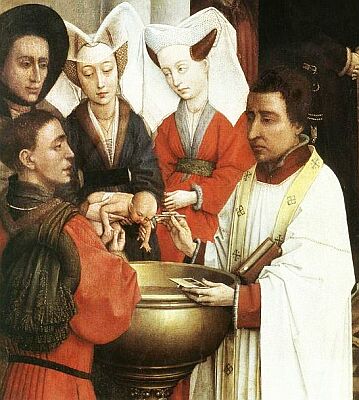
So how is man, once redeemed by the shedding of the blood of the Lamb, to be united to this propitiatory offering? Through Holy Baptism, the ''individual'' (as opposed to person in Zizioulas' thought) enters into and shares the Son's essential relation to the Father existentially. Yet, this laver of regeneration can only occur by the work of the Holy Ghost. It was through Him that the world began to be renewed by His overshadowing of the Woman, it was He that led Jesus into the desert to prepare for His ministry and redemptive work and it was in He that Christ offered Himself on the Cross to the Unbegotten One. Our baptism is by water and the Spirit. Not by water alone. But the Spirit presupposes the blood and the blood presupposes the Spirit. In fact, they are simultaneous. Christ dwells in our hearts by faith with the Father and the Paraclete. We are temples of the Holy Ghost. There can be no opposition.
In the life of the Blessed Trinity considered apart from creation, the Holy Ghost precedes (primarily/principaliter) from the Father through the Son. There is a one-ness in the immanent Trinity and this is manifested in the work of the economic Trinity. It is absolutely true that the redemption, regardless of appropriation, is conducted in common. The Three Persons act.
How then does this relate to Pentecost? It is certain that on this solemn day we celebrate the Birthday of the Church. By the appearance of the tongues of fire, the Apostles depart with a firm conviction and a new awareness of the uniqueness of the Person of their Saviour and His divine mission. This only occurs because of the illumination of the Holy Ghost. Apart from Him, Jesus can only be regarded as an individual from the past, someone subject to historical constraints and prejudices. This is entirely false. If the Third Person were not to be shed above the disciples gathered in prayer, how could we possibly reach the one that had ascended to the Father?
While Christ instituted the Church, we may say truly that she is constituted by the Holy Ghost.
In conjunction with this truth there can be no discord between the spirit and the institution. Amt und (oder?) Geist can never enter into our consideration of the Church and the world. Just as the doctrine of Christ is not His own by that of the Father, so the Holy Ghost only reveals what He has heard from the Father. The unity of the Godhead consists in the Monarchia of the Unbegotten. That same Spirit is not a liberator considered apart from Christ (the institution-maker) but is sent by the Son to convince the world of sin, justice and judgment. He has the same mission as the Son, as 'One sent', ''He shall glorify Me (Jesus): because He shall receive of Mine and shall show it to you.''
Therefore in accordance with the words of the Saviour, we must continue to rejoice in that same Spirit Who is building up the Body of Christ unto the fullness of the man. He still works in souls to unite them to the Death of the Lord so that we may be taken up to the dignity of sons of God in the Holy Ghost. There is no other name in heaven or earth that man can be saved under except Christ and no one can proclaim Christ is Lord apart from in the Holy Ghost.
In the Creed it must be seen that the Third Person of the Holy Trinity should never be considered as an optional extra or a name to be inserted out of a certain form of piety. We sing each Sunday while kneeling, 'et Incarnatus est de Spiritu Sancto ex Maria Virgine: et homo factus est'. The Oblation of our Redemption could not occur unless the Logos united Himself with a human nature so that He could offer Himself as a propitiation for our sins. This is the key point of our Faith. In other religions, man raises himself up by his own will through his own energy often through some form of 'purification'. On the other hand, the beauty of the Christian Faith is that the Son of the Eternal Father descended out of love to dwell amongst us as man by the power and work of the Holy Ghost. By the work of the Holy Ghost. It was the same Paraclete that overshadowed the Holy Virgin so that she may conceive and bring forth the holiest of all fruit, Jesus, that fell upon the disciples on the day of Pentecost.
His Excellency states in this respect that Christ is conditioned 'Pneumatologically', and that this is absolutely essential to His becoming man. According to this theologian, Jesus Christ is inconceivable as an individual by is ontologically relational. In first place, He is the only-begotten Son of the Father, and without this filiation the Father could not be Father. He descended not as an individual but with a body, a body that was to unite the dispersed people so that they may become holy. He came with one intention, for our sanctification in obedience to the Father's will.
So how is man, once redeemed by the shedding of the blood of the Lamb, to be united to this propitiatory offering? Through Holy Baptism, the ''individual'' (as opposed to person in Zizioulas' thought) enters into and shares the Son's essential relation to the Father existentially. Yet, this laver of regeneration can only occur by the work of the Holy Ghost. It was through Him that the world began to be renewed by His overshadowing of the Woman, it was He that led Jesus into the desert to prepare for His ministry and redemptive work and it was in He that Christ offered Himself on the Cross to the Unbegotten One. Our baptism is by water and the Spirit. Not by water alone. But the Spirit presupposes the blood and the blood presupposes the Spirit. In fact, they are simultaneous. Christ dwells in our hearts by faith with the Father and the Paraclete. We are temples of the Holy Ghost. There can be no opposition.
In the life of the Blessed Trinity considered apart from creation, the Holy Ghost precedes (primarily/principaliter) from the Father through the Son. There is a one-ness in the immanent Trinity and this is manifested in the work of the economic Trinity. It is absolutely true that the redemption, regardless of appropriation, is conducted in common. The Three Persons act.
How then does this relate to Pentecost? It is certain that on this solemn day we celebrate the Birthday of the Church. By the appearance of the tongues of fire, the Apostles depart with a firm conviction and a new awareness of the uniqueness of the Person of their Saviour and His divine mission. This only occurs because of the illumination of the Holy Ghost. Apart from Him, Jesus can only be regarded as an individual from the past, someone subject to historical constraints and prejudices. This is entirely false. If the Third Person were not to be shed above the disciples gathered in prayer, how could we possibly reach the one that had ascended to the Father?
While Christ instituted the Church, we may say truly that she is constituted by the Holy Ghost.
In conjunction with this truth there can be no discord between the spirit and the institution. Amt und (oder?) Geist can never enter into our consideration of the Church and the world. Just as the doctrine of Christ is not His own by that of the Father, so the Holy Ghost only reveals what He has heard from the Father. The unity of the Godhead consists in the Monarchia of the Unbegotten. That same Spirit is not a liberator considered apart from Christ (the institution-maker) but is sent by the Son to convince the world of sin, justice and judgment. He has the same mission as the Son, as 'One sent', ''He shall glorify Me (Jesus): because He shall receive of Mine and shall show it to you.''
Therefore in accordance with the words of the Saviour, we must continue to rejoice in that same Spirit Who is building up the Body of Christ unto the fullness of the man. He still works in souls to unite them to the Death of the Lord so that we may be taken up to the dignity of sons of God in the Holy Ghost. There is no other name in heaven or earth that man can be saved under except Christ and no one can proclaim Christ is Lord apart from in the Holy Ghost.