Monday, 5 May 2014

Reflection on the Good Shepherd

Ego sum pastor bonus et cognosco meas et cognoscunt me meae

O what delight and consolation this should lend to the Christian soul! This profound intimiacy between ourselves and our Divine Protector and Redeemer! Our assent to the Lord must not be reduced to some form of syllogism where His guiding and nuturing hand is considered in the abstract.  Our Lord knows us as we know Him just as He knows the Father who sent him. What does our Lord say to the damned but, "I know thee not". On the contrary, He says to us, "I know thee, I love thee, come to Me".

Tuesday, 29 April 2014

Reflection on the New Evangelisation


The trumpeting of the need for a New Evangelisation is a more than tacit acknowledgement that the novel project of the Second Vatican Councol failed. If we are to state that the objectives of the New Evangelisation are to present the Faith in a modern way for modern man, either the Council has not been implemented (however with much destruction) or it tended to disaster. On no possibility do the Roman Pontiffs emerge immune from culpability. 

Saturday, 26 April 2014

Reflection on Racism

To the explicit racist and the race hustler pertain the same species of malice, where the most bitter animus is projected upon the perceived threat of another grouping. Both are alike tinged with self-righteous indignation yet the latter is all the more dangerous for appearing pure and often in the elitist of circles.  

Tuesday, 22 April 2014

The Fathers Speak...The Person of the Holy Spirit and the Filioque


Saint John Damascene, De Fide Orthodoxa

''Likewise we believe also in one Holy Spirit, the Lord and giver of life . . . God existing and addressed along with Father and Son; uncreated, full, creative, all-ruling, all-effecting, all-powerful, of infinite power, Lord of all creation and not under any lord; deifying, not deified; filling, not filled; sharing in, not shared in; sanctifying, not sanctified; the intercessor, receiving the supplications of all; in all things like to the Father and Son; proceeding from the Father and communicated through the Son''

Reflection on the Sacraments


The sacraments have been fittingly ordained for the wayfarer in a redeemed world. While they purify the soul they cleanse the senses. They not only effect what they signify but they are constant reminders of how matter should be used, that is, in honouring the beauty and goodness of God whose secrets are made manifest by the things that are. 

Monday, 21 April 2014

Reflection on the Pope and the Faith


If you hang on to every word of the Roman Pontiff to discover what the latest attitude of the Church is, you have gone astray from Catholicism and instead have joined an esoteric cult. 

Reflection on Charity

Charity is the sweetness that transforms all other actions into great virtues inclining them to their only worthy end in God, the Supreme Charity. If man has not charity, all seemingly commendable acts are reduced to vice. The purification that is charity makes a man a companion of God and a true lover of self. 

Reflection on Religion as Divisive


The cardinal virtue of religion is that it is divisive. It separates good from evil, the elect from the reprobate, justice from oppression, heaven from hell, God from Satan. A unity without regard to these categories is a sham and a greater mythology than they could very accuse us of. 

Reflection on Individuality

The amusing aspect about the cult of individuality is that there is a parade of like minded souls parroting the same lines about choice and creativity unaware they each so mimics the other that none knows who has originated the trite catchphrases they incessantly declaim.

Friday, 18 April 2014

Reflection on Good Friday


From the eternal Father was begotten in the most intimate manner the Son, the perfect image and Word of the First. The entire divine nature was communicated to Him without lapse of time nor numerical division. The principle that goodness is diffusive of itself is persevered and perfected in the immanent notional acts. It was therefore not necessary at all for God to create anything as He was sufficient in the one society of the Blessed Trinity, lacking nothing and possessing all. He brought us forth not according to any essential emanation of His divine nature but according to the order of His absolute free and sovereign will. There was no compulsion in this decree which had its effect in time, as though God had a moral imperative to bring forth creatures to share in His essential goodness. It was not better that God should create. It pertained to His liberality and was merely fitting that we should be formed from nothing. His absolute will was subject to nothing other than His wisdom and justice.

 On Good Friday, we contemplate the binding of the God for the sake of those He created freely and with the utmost ease. There was no strain in creation. Even though the cosmos was brought forth from no pre-existing subject, and we were the most purest of potentialities, by a single decree of His divine will, all began to exist with time. With in the beginning, God gained nothing. In the fullness of time , He lost everything. The power that said 'Let there be light' and the light was made, descended into the darkness. The hands that could stretch across the horizon, directing, governing and moulding all that He brought forth freely, are now bound and He is left only to groan and writhe. The lifeless earth trembled while He who is essential Life, fell silent.    

Wednesday, 16 April 2014

The Doctors Speak


From the last good Jesuit besides Louis Cardinal Billot:

''God wanted man to know him somehow through his creatures and since no creature could fittingly reflect the infinite perfection of the Creator, he multiplied his creatures and gave a certain goodness and perfection to each of them so that from them we could judge the goodness and perfection of the Creator, who embraces infinite perfection in the perfection of his one and utterly simple essence, just as a gold coin contains the value of many copper coins. My soul, when anything seems wonderful strikes your eye or your thought, make it a ladder to recognise the Creator's perfection which is incomparably greater and more wonderful. This way created objects which have become a 'snare to the feet of the unwise' (Wis 14:11), as the Book of Wisdom teaches, will not mislead you but will teach you; they will not cast you down but direct you upward toward better things. Therefore, if you encounter gold or silver or jewels, you will say in your heart, ''My God is more precious, who promised to give me himself if I despise these things.'' If you marvel at kingdoms and earthly empires, say in your heart, ''How much greater is the kingdom of heaven which endures forever and which God, who does not lie, promised to those who love him.'' If pleasures and delights begin to titillate your sensuality, say in your heart, ''The pleasure of the spirit is much more enjoyable than the pleasure of the flesh, and intellectual delights are much more enjoyable than those of the belly.'' The first come from a perishable creature, the second come from the God of all consolation. He who tastes the latter can say with the Apostle, ''I am filled with comfort, and I overflow with joy in all our troubles'' (2 Cor 7:4). Finally, if you are offered something beautiful, new, unusual, great, or wonderful on condition that you desert your God, answer serenely, ''Whatever good they possess and much more and better are beyond doubt to be found in God.'' Therefore, it would be useless to trade a gilded coin for gold, glass for a precious gem, little for much, the uncertain for the certain, and the temporal for the eternal.

Sunday, 13 April 2014

The Doctors Speak


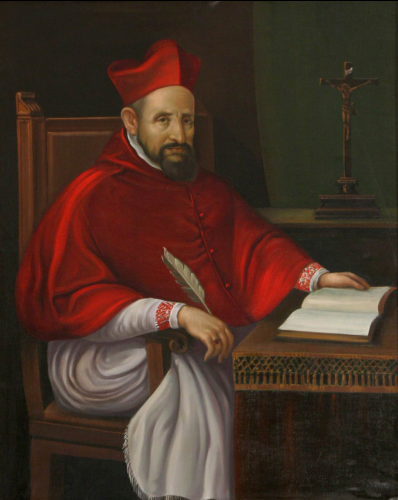
St. Robert Bellarmine

''Now it is the time for us to go up as well as we can to the fountain of wisdom. Ecclesiasticus says, 'the word of God on high is the fountain of wisdom'' (Sir 1:5). He rightly says ''on high'', because the fountain of wisdom richly and profusely flows out not only to the holy angels and to the souls of the blessed who live in heaven, but to us who are engaged as pilgrims in this desert, there comes not wisdom but a certain mist or scent of wisdom.
 For this reason, my soul, do not for now seek higher than you should. Do not be a 'searcher of majesty'' lest you ''shall be overwhelmed by glory'' (Prv 25:27). Wonder at his wisdom about which the Apostle Paul says, ''God who alone is wise'' (Rom 16:27). Congratulate the blessed spirits who drink from the fountain of wisdom, and although they cannot fully grasp God, which is a property restricted to the very fountain of wisdom itself, still they look into the face of God, the first cause, not covered by any veil, and understand aright all things in the flashes of his splendor. In that noonday light of wisdom they do not fear the darkness of error nor the obscurity of ignorance nor the fog of opinions.
 Aspire after this happiness: to obtain it with certainty, love with your whole heart the Lord Jesus Christ, ''in whom are hidden all the treasures of the wisdom and knowledge'' of God (Col 2:3). He himself said in his Gospel, ''He who loves me will be loved by my Father, and I will love him and manifest myself to him'' (Jn 14:21). What does ''I will manifest myself to him'' mean except that ''I will manifest all the treasures of the wisdom and knowledge of God which lie within me?'' Certainly every man by nature desires to know, and although in many people fleshly concupiscence now in a way puts this desire to sleep, still when we shall have put aside our body which decays and which now weighs down the soul, then the fire of this desire will blaze out beyond all other desires. How great will be your happiness, O soul, when Christ your beloved and lover shows you all the treasures of the knowledge and wisdom of God? Strive to keep the commandments of Christ so that you do not cheat yourself of this great hope. He said, ''If anyone love me, he will keep my word'' (Jn 14:23, 24). Meantime, let your wisdom be that which holy Job describes when he says, ''The fear of the Lord, that is wisdom, and to depart from evil is understanding;; (Jb 28:28). Recognise that any good you see in creatures flows from God, who is the fountain of goodness, so that you can learn with Blessed Francis to taste that fountain of goodness as it flows in individual creatures as in streamlets'' - ''God is the Fountain of Wisdom'', in ''The Mind's Ascent to God by the Ladder of Created Things''

Reflection on Reading as a Devotion


The driest and most dense tome of metaphysics may furnish as many graces and as much illumination as the reading of any spiritual text by the most mystical of ascetics for the one who is well disposed to discover God in all truth.

Saturday, 12 April 2014

Reflection on the Cause of Evil

The very possibility of evil arises from the quality of all things besides the divine essence. Defectibility is an intrinsic and necessary possibility of all that is composed of act and potency. Goodness which is convertible with being is the material and accidental efficient cause of evil as without a subject in which to inhere it could not even be known.

Friday, 11 April 2014

Reflection on Thomist Metaphysics


Perhaps the key principle in Thomist metaphysics is that of the real distinction between act and potency. This principle readily presents itself to the mind and is fundamental if one wishes to distinguish the Actus Purus Who is God and the corruptible cosmos of creatures. The failure to have even any implicit understanding of this axiom will shatter not only a solid understanding of metaphysics or natural philosophy but will unhappily extend to every treatise possible of Sacred Theology. Grace, predestination, the human will and even the immanent notional acts of the Divine Trinity will be devastated. A sound cognisance of metaphysics will cover for a multitude of theological errors.

Thursday, 10 April 2014

Reflection on the Fundamentals of Faith

The mystery of the Blessed Trinity and the Redemptive Incarnation are the fundamental dogmas of our Catholic Faith without which the while edifice of belief would crumble. Prescinding from these would lead us to a naturalistic philosophy based on sentiment and would not be more divine than any other fabrication of a lonely and needy soul. To put aside these dogmas as though they were hindrances to dialogue is to strip man of anything that could possibly save him and those he claims to love.

Saturday, 5 April 2014

Reflection on Conscience

Conscience must be defined as knowledge of the natural law applied to some particular instance. It is foolish to give it a unique place in human judgement if we are to consider it instead as some form of manufactured imposition of one's preferences onto reality. What is pleasant and endearing should not necessarily be sealed with the sanction of individual conscience.

Reflection on Religious Liberty

Religious liberty necessarily is conducive to suppression of religion in the public sphere. While it attempts to protect individual freedom from coercion it reduces all religions to the same level of irrelevance. From the ashes of a fallen Christendom, a pathetic carcass of secular morality rises up due to the absence of a vital Catholicism. When all that matters is not the truths of religion but the mere option to choose, it should cause no surprises that when the content of one of these systems demands a bit too much to be comfortable for the rest, it will be ruthlessly put down.

Instead of promoting the rights of God, we have falsely adopted the right of man to form his own understanding of reality, which is of no more validity than anyone else's.

Reflection on Repentance

The vital difference between attrition and perfect contrition is that the former consists in how sin afflicts man while the latter considers how sin offends the All-Holy God. Only the saints have breached the chasm between the two. Sanctification may be said to be found in the transition from the first to the second.

Reflection on Traditional Catholicism

We must not foster a common notion that traditional Catholicism is intrinsically linked to various pet conspiracy theories incidental to the actual Faith. Too often "adherents" of our movement have made fools of themselves and the Catholic Faith by attributing divine approval and decree to what is frankly ridiculous and belongs in no way to the Deposit of Revelation.

Wednesday, 2 April 2014

Reflection on "Only God can Judge Me"


Those who proclaim "Only God can judge me" in the face of public criticism should remember that the former is a far stricter and more truthful Judge than any ignorant passerby.

Monday, 31 March 2014

Reflection on Detraction

The pillaging of the reputation is far more malignant than the plunder of material goods. The latter may be returned without suffering loss, but the damaged name of another can only be repaired over much time and where the suspicion of doubt will always rest.

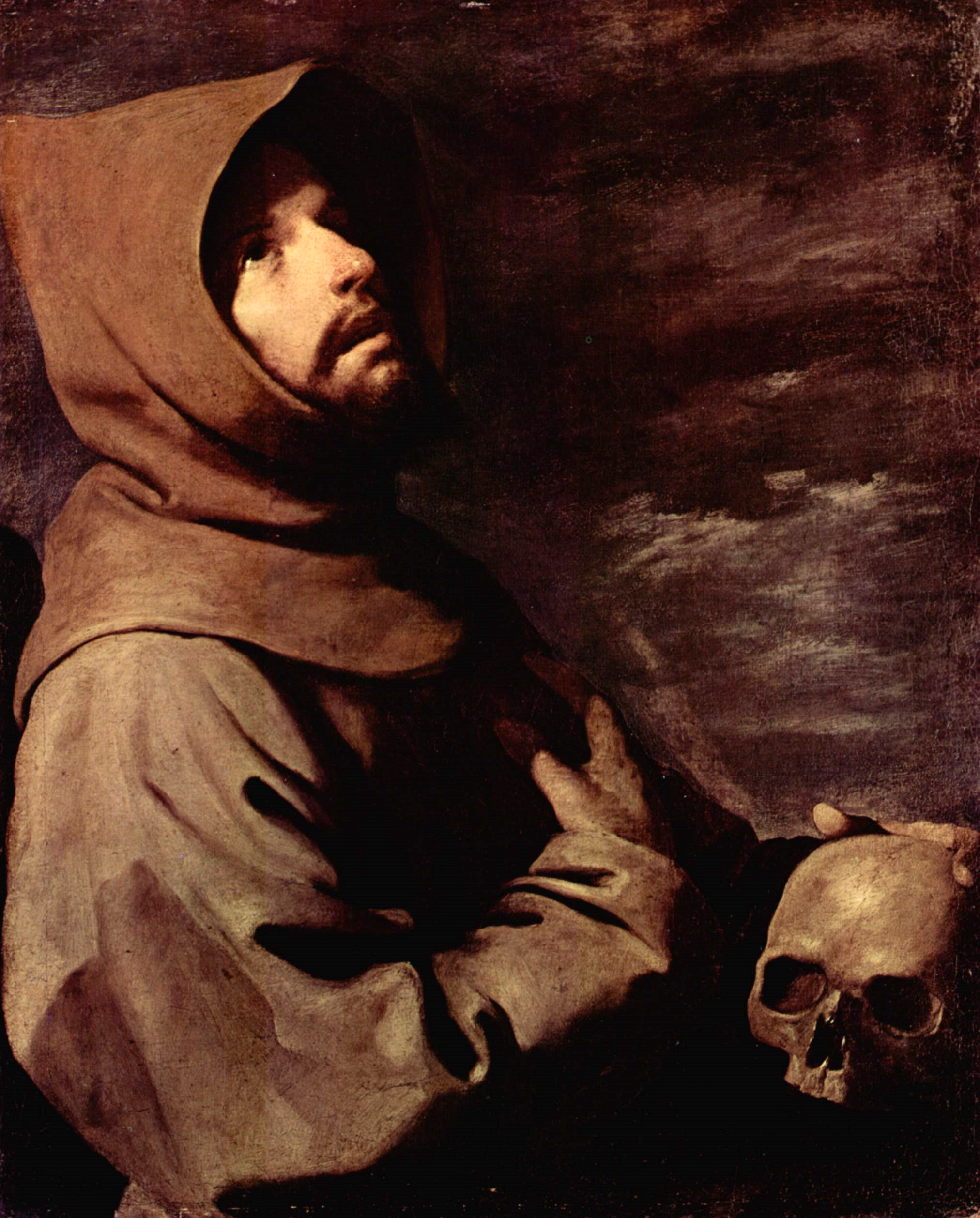
St. Bonaventure on the True St. Francis


''True piety which according to the Apostle is helpful for all things, had so filled Francis' heart and penetrated its depths that it seemed to have appropriated the man of God completely into its dominion. This is what drew him up to God through devotion, transformed him into Christ through compassion, attracted him to his neighbour through condescension and symbolically showed a return to the state of original innocence through universal reconciliation with each and every thing. Through his virtue he was attracted to all things in spiritual love, especially to souls redeemed by the precious blood of Jesus Christ. When he saw them being stained by the filth of sin, he grieved with such tender pity that he seemed like a mother who was daily in labour pains bringing them to birth in Christ. This was his principal reason for reverencing the ministers of the word of God, because with their devoted concern for the conversion of sinners they raise up seed for their dead brother, namely Christ, crucified for us, and guide them with their concerned devotion. He firmly held that such work of mercy was more acceptable to the Father of mercies than any sacrifice, especially if this eagerness arose out of perfect charity more by example than by word, more by tear-filled prayer than by long-winged sermons.'' - The Life of Saint Francis

Reflection: The poor friar was a radical lover of God, his whole orientation and being were directed towards and grounded in the mercy of the Lord for the miserable sinner. He grieved over the poor, the innocent, the dejected, the suffering, as he could only envisage the countenance of the Crucified Lord in them. For him, all should tend to God, all should give praise to Him. All belongs to His mercy and goodness. His heart abounded in trust for God Who would bring him and his brothers back to the bosom of His tender goodness. Sin was abhorrent to Francis as it marred the divine likeness in man and could be be an insult of ingratitude to the One Who has offered him so much. 

Saturday, 29 March 2014

Reflection on Truth and Feelings

When all validity is relegated to the perception of offense, all objective reality is utterly destroyed.

Reflection on the Temporal Missions

The temporal missions of the Divine Persons mirror exactly the immanent divine life and origins of the subsisting relations as God does not reveal Himself to be other than He is. If it be objected that the Son is set by the Spirit, one must respond that it is in accordance with His assumed humanity. The Second Person is sent by the One who has charity appropriated of Him as it is by charity that God unites Himself to us. Furthermore, as sanctification is by extension appropriated to the Third Person, the hypostatic union is the principle of our redemption.

Friday, 28 March 2014

Reflection on Public and Private Religion

All that is of the natural order is to be referred to God as urgently as all that which pertains to the supernatural. There is no private sphere that prescinds from the dominion nor the paternal solicitude of our Lord and Saviour, the Author of nature and of grace. What has been rendered to Caesar was first given by God and it shall return to Him.

Reflection on Overcoming Pride

Humility most offends the natural and so-call justly possessed notions of self-worth and noble purpose. The desire for acknowledgement by others as you intend good is the deepest thorn of pride to remove.

Wednesday, 26 March 2014

Reflection on the Priesthood


As the priesthood is entirely of the supernatural order, common place notions of inclusivity and opportunity do not apply. The only truly worthy priest is our Lord and High Priest, Christ.

Monday, 24 March 2014

Reflection on Enjoying the Good Things in Life


On Use and Enjoyment: Distinction One of the Sentences

We truly enjoy those things of the created order when we perceive the divine traces that are scattered along the horizon. The divine likeness among creatures forms an ascending and descending hierarchy from and to the Foundation of all delight and our one true rest. We are not to discard with contempt what is beautiful and glorious but we are under obligation to refer them back to their Source. Only in the light of this acknowledgement can we be said to properly use things, not as mere instruments but as finite rays of the divine goodness.

Sunday, 23 March 2014

Reflection on Writing


In writing there is always a temptation to be original when being truthful would suffice.

Saturday, 22 March 2014

Reflection on Mercy

Mercy must not be defined merely as the withholding of punishment due but as the granting of grace to obtain a degree of perfection.

Reflection on Appealing to Compassion

The cry for a renewal appears all the more sweet when it is sickened by the appeal to mercy without consideration of goodness.

Friday, 21 March 2014

Reflection on Truth and Conversion


Let a boy's natural curiosity for knowledge be united with a young man's delight in pursuing and grasping truth, and any moral objection to embracing the Faith will fade away.

Reflection on Predestination

God does not grant a man salvation because He foresees that he will merit it, but rather He grants the merits to make him worthy of it.

Saturday, 15 March 2014

Reflection on Pope Francis and Evangelii Gaudium


For Pope Francis the Joy of the Gospel appears to be founded upon the rejection and negation of all that made the faithful in ages past rejoice at the beautiful, the sublime and the glorious. Instead of an objective complacence in what is truly good, he has exchanged this for a superficial and dangerous glee in poverty so falsely understood.

Reflection on Customs and the Faith


Pious customs and liturgical norms incarnate the Faith so that in the minds of the simple and the learned alike become almost synomymous with our religion. It is for this reason that Suárez considers the Roman Pontiff who puts away the treasures of the Catholic religion to be a schismatic, severing himself from the life and charity of the Body of Christ.

Reflection on the Will and Intellect

The boundless licence of this age appears to precede from the mindless subjection of the intellect to the will. Instead of full formed choices grounded in appreciation of objective really man now considers the very act of choosing to be of primordial importance. How can one choose freely what one does not know? It is for this reason that modern man is frivolous in his pursuit of delight. He becomes emptier as he fills himself up.

Reflection on Who Can Be Saved?

Is there anything more offensive to God's dominion and economy of salvation than to assert that the pleasant shall inherit the kingdom? It is absolutely impossible for the atheist to enter eternal glory no matter the value of his natural works in the sight if men. In an attempt to exalt the mercy of the Lord they besmirch His decrees and oppose His grace. Salvation for them can only consist of the intensification of natural pleasure and not the face of God as He is in Himself.

Reflection on Ambiguity


A prelate's ambiguous words must not be interpreted favourably when he puts the Faith in danger. The view that it is disobedient to oppose his loose speech is to subject man's absolute loyalty to God to his conditional submission to earthly legitimate authority.

Sunday, 9 March 2014

Reflection on Temptation

In matters of temptation, one either falls on God or falls from God. There is no middle term.

Reflection on Modernity

The modern by its nature is relative and consequently always in danger of passing into old-fashionedness particularly quickly. As its newness decreases, so does its relevance. Its instrinsic value is limited to the age in which it finds favour.

Reflection on Adapting to the Times


The sexual morality of the Roman and Hellenistic world of the first century was not very dissimilar to our own. Yet when our Lord came He preached the indissolubility of marriage and the illicitly of acts outwith it. What principle could be further from His divine mind than adapting to "modern sensibilities"!

Saturday, 8 March 2014

On the Divine Relations and Communicable Divine Nature


''There is in God actually, or in the order of reality, only one being, which is not purely absolute or purely relational, neither mixed nor composite, or resulting from either of these, but most eminently and formally possessing that which is relational and that which is absolute. So in the formal order, or in the order of formal reasons, in Himself, not in our mode of speaking, there is in God only one formal reason or essence. This is neither purely absolute nor purely relational, neither purely communicable nor purely incommunicable, but most eminently and formally containing both that which is absolutely perfect and that which the relational Trinity demands. We are in error, however, when we proceed from the absolute and relational to God because we imagine that the distinction between the absolute and the relational is prior to the divine nature. The complete opposite is true, for the divine nature is prior to all being and all of its differences; it is above being, above one, etc...It remains that (God) is both communicable and incommunicable'' - Cajetan.

Commentary: There is a particularly certain danger of regarding the divine relations as something superimposed onto the perfect and complete divine essence. We are not to consider the Persons as being mere accidents existing consequent to the deity, almost as a secondary formation distinct from the Godhead or as having no subsisting reality apart from the reflection of our minds. Nor is the distinction due to the economy of salvation where God appears in time in different guises to communicate some heavenly lesson to frail man. There are no accidents in the actus purus not is there any potentiality for perfectibility in Him. It must be stated here that the Thomists posit a minor virtual distinction between the divine Persons and the divine essence. Our concept of the divine nature implicitly contains paternity while the blessed in their glory intuitively yet not exhaustively know the personal and subsisting divine relations. The obstacle appears to be the fact that while the divine nature is communicated entirely to the Word by the Father, it does not follow that paternity is included in the transmission of the essence. It is for this reason that we say the paternity of the Father is altogether incommunicable or the formal distinction between the Persons would be confused and the divine ''order'' would arise merely from human constructs of reason. There is however an absolute identity of the Father and the Godhead, He truly is God, yet He is not the Son, nor the Spirit, Who each fully possess the entire divine essence. Let us consider prayerfully the dictum of the Council of Florence, ''In God all things are one where there is no opposition of relation''. This supernatural mystery can not by reason alone be demonstrated and it would have remained far above the reaches of man if God had not revealed it to us. A consideration of the cosmos may lead man to an analogous knowledge of the creator of all but there is nothing in nature that can point man infallibly to the Triune nature of God as He is in Himself. On the level of natural theology only a consideration of de Deo uno may be made.


Thursday, 6 March 2014

Reflection on Egalitarianism

Egalitarianism is a pious fiction and a fairy tale imposed on a random assortment of matter by those who claim to have out aside childish religious mythology.

Wednesday, 5 March 2014

Reflection on Liberal Theology

Liberal Catholicism is nothing more than sentimental anthropology. Their only "Theos" is in their belly and their glory is in their shame.

Monday, 3 March 2014

Michael Matt on Criticising Pope Francis


I'll let Michael Matt speak for himself. His words are certainly worthy of consideration. No Catholic should rejoice at the opportunity to rise up against the Holy Father, in fact it should cause us great grief to realise that we have almost been abandoned by the Shepherd who appears oblivious to the dangers that press on from all sides against the Catholic Church. Let us pray constantly for the illumination of the mind of Pope Francis so that his words may at all times mirror the mind of the Church concerning the Orthodox Faith. On the other hand, let us never be so naive to expand the respect due to the office of the Petrine ministry to ridiculous lengths that damage not only the Church but the soul of the very pontiff who could continue in his errors without opposition. Let Christ and the faith He founded be our first consideration and from that we will proceed with the greatest love possible for His Vicar.

Sunday, 2 March 2014

Reflection on Elections

When the far left is considered by the media to be the political moderates any party with a semblance of conservatism can only ever be seen as extremist and reactionary.

Saturday, 1 March 2014

Reflection on the Eternal Father


To claim that Christians, Jews and Muslims share the same Father is to confound the orders of nature and grace. It reduces the baptismal life to nought, resulting in the most deplorable heresies. The error of Pope Francis either consists in material heresy or a dim mind. May the reader chose the most apposite.

Reflection on Favouritism

It is foreign to Catholicism to insist on a poor Church for the poor. This narrow minded exclusivism   only leading to factions and self-righteous accusations. Christ is not Saviour for one group in an economic sense. We preach a Catholic Church for the Catholicus.

Thursday, 27 February 2014

Reflection on Tolerance

Tolerance is not the virtue of a magnanimous spirit but rather the vice of a tepid and weak soul.

Reflection on Diversity

If human society is truly diverse, how can we say there exists absolute equality amongst the members of it?

Reflection on Papal Popularity


Is it reasonable to suggest that if the reigning Pontiff is considered likeable, men would put away their vices at once and follow Christ wherever the Lamb shall go? It appears that Francis is lauded as it seems to the opinion makers that he is not Catholic.

Sunday, 23 February 2014

On the Gospel for Sexagesima

Benedicta sancta Trinitias, atque indivisa unitas!

Taken from St Luke, 8:4-15.

A fundamental lesson of our Lord's words in today's Gospel highlights two aspects which I would like to develop further in this short reflection. Let us begin by considering the first which will lead into a more fruitful discussion of the latter.

1) The universal reach of divine causality. 

All that is not God is under the dominion and sway of God. All persons of whatever state, condition and means are subject to His will whether they have ever paused to consider His lordship or have ever acknowledged it. This is symbolised by the various qualities of the ground. As the great multitude pressed about Jesus anxious to hear His latest teaching and perhaps to experience a further miracle, our Lord spoke in a parable which even the Apostles deemed as beyond their understanding. In response to their question as to the meaning of the sower going out to sow, Christ said, ''To you it is given to know the mystery of the Kingdom of God, but to the rest in parables: that seeing they may not see, and hearing may not understand''. In contradistinction to Billuart I consider this to be the sacred puzzle and the toughest aspect of theology for the mind to apprehend. Why is it that God elevates one to the supernatural level and maintains them there in His grace while He permits another to be obdurate before His appeal in love? Let us not be so foolish as to believe that God grants certain indiscriminate, naked graces to all souls that they are free to accept or decline. Is God not capable of bringing forth good fruit from the harshest of soil? Is He not willing to till the ground so that the weeds are cast aside to allow the seed to grow? Is He powerless before His creatures?

 We hold God to be the creator of nature and the author of grace. The fruitful reception of grace by a soul is not dependant upon the conditions of time and space which God foresees, as the followers of Molina assert, but rather it is God who turns to us and grants us life. By His divine movement He converts the soul to Himself, eliciting a truly free and human response. The soil is not 'discovered' by the sower, an analogy of the redemption love of Our Saviour, where He is incapable of turning the ground so that it is sensitive to His approach. The soil represents the soul laid bare and its quality is utterly dependant upon it's response to God's movement of redemption. Nothing else matters in this life. Is salt which has lost its saltiness is only good to be trampled upon what use is infertile soil to a grace filled, fruitful life in Christ? It is fit only to be condemned to rot.


2) Sufficient grace is granted to all men so that they might be saved. No man may ever claim that God has abandoned him to achieve his own salvation. All men are granted sufficient grace to know and love the one true God and redeemer of the nations. We hold that God is certainly capable of saving all men if He so decreed but that in His wisdom and justice He allows certain souls to remain outside of His love, where the devil reigns in his rebellion. Through malice the bloom of efficient grace is suppressed and man can only answer for his rejection of God. No soul could ever reproach God for failing to approach him in grace. Yet too many, as Our Lord teaches, only accept parts of the Gospel to suit their own ''needs'' and to appeal to their convenience. They receive it as only a teaching of man, a lifestyle, a simple philosophy to adapt to their circumstances. It is on account of this misunderstanding of the divine foundation of the Gospel, that Satan so quickly and easily snatches away the seed that God has planted so that they may not truly believe and be saved. As it falls among thorns, it is choked by a worldly conception of God's action among us. For these unfortunate souls, God's mission of redemption is seen as weaker than the allurements of the flesh, the seed of the word of God is considered cheap and easily bought. They have refused to see that the ground was purchased by the blood of Christ. It is not the burial place of the Traitor that is the field of blood, but our own souls. No fruit is brought forth for these men who have converted the Gospel into another aspect of their lives, a token, a sentimental belief that leaves their inner nature untouched by grace. They lack supernatural faith and rely on tradition, custom or hold on to particular features of the Gospel for the sake of consolation.

 The soul that is well prepared by God is receptive to His further graces. In patience they accept what He has decreed eternally at whatever moment He brings it about in time and space. Their glory before God is unending, they bring forth a hundred fold of what is sweet and pleasant in the sight of the saints. They are the moisture of civilization. They are the instrumental causes of the fruitful reception of grace by other souls. God works through them to show His mercy to others. They predispose other men to prepare themselves for God. It is with joy that they submit themselves to the sweet yoke of Christ and His Cross, where they see only glory and opportunity rather than a burden to be shunned if possible. All other souls perish when they regard the grace of God in too human a fashion, choked by cares and ambition.

 Let no man glory in his salvation but be grateful that he has been called out of nothing to be raised to a formal participation in the divine nature by grace. Let the reprobate condemn himself for his hardness of heart and stiff neck. Let God be glorified in all things.

 In Domino,

Charles Stuart.

Reflection on a "Church for the Poor"

A "Church for the poor" is just as exclusivist as a "Church for the rich" and which in turn reduces the essential mission of salvation on the part of Our Lord to that of inspirational leader or moral charlatan.

Saturday, 22 February 2014

Reflection on Grace

No grace could ever be asked for had there not been an anterior grace granted so that the seeker may desire it.

Reflection on Progressivism

It is enticing to believe that popular based change is to be accounted as progress, to consider oneself to be part of a future-defining moment. Yet if there exists no standard but the very fluidity of movement, how could one possibly and objectively determine with any sort of confidence progression or regression of said acclaimed alteration?

Reflection on a New Catholic Church

To present an opposition between an exclusivist fortress Church and an evangelizing, missionary spirit is to posit a false dichotomy. For the missionary Church to be truly evangelical it must possess a truth or a treasure which is worth zealously guarding. There is nothing less relevant or useless than an open mind which is devoid of content. A missionary Church which has suffered the loss of such a precious jewel can only eco back the sundry prevailing fashions and slogans of a decadent and transient age while claiming to present a new reality for the people of God.  Their new orientation is secular humanism which is only tinged with religious sentimentality to ease their consciences.

Theological Shorts - The Immutability of God


In this theological and philosophical reflection we proceed to explain the mind of the Angelic Doctor which was in complete harmony with the articles of Faith upheld by the Catholic Church concerning the immutability of God. Our guide shall be the Theological Summa, First Part, Question 9, Articles 1 and 2.

The metaphysical essence of God primarily consists of His self-existence or what one may term His aseity. This truth is what is first presented to the mind of man when He considers the nature of God. Alone of all that exists God is said to be pure act, without any admixture of potentiality, Who is rightly held to be Himself in virtue of Himself and not through another. The Thomists teach that His existence and His essence are identical as He requires no outside force or agent to unite them by acting upon Him. We posit only a minor virtual distinction between His divine attributes and each one is notionally included in the other without confusion and each formally possesses the divine nature entirely. His duration is eternal, His relation to the external created world is non-necessary and purely voluntary. His end is Himself and all that He wills is willed for Himself and His own goodness. His will is immutable, His liberty, supreme, His knowledge, the cause of all things. The mixed perfections of creatures are contained eminently and virtually in Him and other perfections when stripped of their human mode of signification may be formally attributed to Him.

We hold it be an article of Faith as well as a certain truth of reason that God, the creator of all that is, the fountain of all that moves, the sustainer of all that perishes is Himself immutable in a way not possessed by any other substance whether rational or purely spiritual. We posit absolute simplicity in the divine nature which can be known analogously and abstractly through a consideration of God's actions ad extra. Yet the objection may arise that the angels themselves are pure spirits, free from the encumbrance of finite matter to restrain their being, possessing no division of parts, having reached their end already. However they, like man and the rest of creation, possess their essence and existence ab alio. It is correct to say that they are self-subsisting beings, individuals which do not form part of another or exist in the form of an accident in another substance, but they are still brought into being from nothing and only held in being by the benevolent will of the one true and immutable God and if He willed that they should be not, they would simply disappear. It is to God alone that we ascribe self-existence, ens a se, in the most proper sense.

 In addition we hold that God is immutable as regards His full possession of perfection or it may be more correct to state that He is Himself perfection of being. He requires no further knowledge to improve His choices, He is in no need of another to console His uniqueness in eternity, He is impassible in His divine nature and subject to no other.  Who could move Him? Who could further determine Him? Who could even have existence beside from Him? He remains from all eternity what He is and He remains Himself without any 'shadow of alteration or decay'.

As a corollary let us pause to set out what Billuart has called the ''nodus totius theologiae intricatissimus'' and an 'aenigma sacrum' that of the relation between the divine immutability, which applies not only to the substance of God but also to His will, and His absolute liberty. God's decrees are entirely free of coercion, change or error. Although it is certainly puzzling to modern man, but God's immutability is the very foundation of His liberty. Man is often deceived as to his choices, which would for sure change if he knew all things and needed none of them, yet he holds himself free in choosing multitudinous objects in successive acts of the will as they are presented to Him. God possesses greater liberty inasmuch as His relation to the world is as the cause of it. There is no necessary relation of God to what is brought into being by Himself from nothing and therefore He is free supremely from want or obligation to act. Joseph Pohle explains furthers:

 ''The kernal of this difficulty is to be found in the thoroughly anthropomorphic conception of divine freedom which man forms after the analogy of his own free will, without considering that the liberty of God is something altogether different in kind...The liberty of God, on the other hand, is not an active indifference with respect to several subjective acts. It is but the indifference peculiar to a single, absolutely simple pure act, in relation to different objects. This divine act, being intrinsically necessary, immutable, and eternal, is extrinsically free, inasmuch as it implies a non-necessary, and therefore a free relation to the created universe'' (Dogmatic Theology, Volume 1)

God in one pure and simple act wills His own goodness and the created participatory goodness of that He chooses to bring into being. His will remains immutable while He creates in time what He has decreed from all eternity to bring forth.

Wednesday, 19 February 2014

Reflection on the Papacy


The Roman Pontiff is the most bound of the servants of God, his scope of action is restricted by divine decree to the presentation of the Sacred Deposit of Faith. He is tied taught by the chains of Saint Peter.

Sunday, 16 February 2014

Reflection on "Marriage Equality"

If we are to hold that in the 21st century marriage is nothing more than an oppressive, outmoded institution, the offer of "marriage equality" should appear more as an act of cruelty than one of solidarity.

Saturday, 15 February 2014

Reflection on Sanctity

Sanctity may be described analogously as the striving to love God as He loves Himself. An absolute identity of being, intellect and will resting in the Supreme Good.

Reflection on Euthanasia

To reduce all worth in human living to the sensation of relative painlessness is to devalue humanity to the level of brute beasts where few rights could ever apply.

Monday, 10 February 2014

Reflection on Equality

Is there anything less self evident than the equality of all men, but is more treated than a fundamental dogma of modern living?

Saturday, 8 February 2014

Reflection on the Supersubstantiality of God

God is above all that we know and is the source of all we know. It is only through the latter that we can know Him at all.

Reflection on a Notion of God

Our conception of God has been the first casualty in the progressive war on civilisation. The anthropomorohization of the divinity to create a God more favourable to human vices has not made Him more relevant but has formed a being utterly incapable of receiving any sort of reverence.

Thursday, 6 February 2014

Reflection on Liberalism

The liberality of modern day liberalism appears confined to the sexual whereas in matters economic and political it verges on the totalitarian.

Monday, 3 February 2014

Reflection on God's love for Man


An appreciation of God's love for man may be honoured in solitude alone. Once out in a crowd, passersby appear only as irritants and obstacles. Let us marvel that God even loves this tangle of souls.

Reflection on "Know Thyself"

If man is a mystery to himself how is he to reach the transcendent God? Consider yourself and His creation in a tranquil spirit.

Reflection on Charity and the Poor


                   The relief of the poor of temporal concerns is only to refresh their hearts for the eternal.

Reflection on Democracy

Democracy is the widescale political equivalent of handing a five year a scalpel to operate on you in the interests of fairness.

Saturday, 1 February 2014

Reflection on Slogans

The vulgarisation of the political or societal slogan has been deftly exploited by those opposed to a natural objectivity and foisted upon a generation much given to parroting a phrase in common but not devoted to actually understanding it. The downfall of liberalism can be brought about by applying their lines of attempted "thought" to situations hardly considered.

Thursday, 30 January 2014

Reflection on Gratitude

It is strenuous to elicit from someone a sense of gratitude towards God for removing some obstacle when they believe that it is their due to be completely undisturbed by trouble.

Saturday, 25 January 2014

Reflection on the Family


The family is to be the workshop of the Faith, where love of God is taught and nourished, where children are formed in justice and knowledge of goodness, where sacrificed is cherished and duty is embraced.

Reflection on the Aufer a Nobis

As the priest is called to stand in persona Christi his first intention must be to conform his mind to the purity of Christ who ascended the Cross with only thoughts of His Father and the redemption of mankind. Let the cleric wish for nothing else than this.

Reflection on Betrayal and Bishops

The Christian soul can not marvel at the enemies of Christ rallying against His Church but the eagerness with which so many prelates rush to undermine the divine foundation of His Spouse is a greater scandal and a betrayal of the simple faithful. So the bishop, so the people.

Reflection on this World

To live in the shadow of the Crucified is to be fundamentally countercultural. By a firmness and trust in our Father's providence throughout all time and space, we believe all shall be resolved and our simple acts of charity and endurance be proclaimed in truth.  When He wills it, all shall be subjugated to Himself, even the wicked who raise up their messiahs against His reign of holiness. The lie of societal progress shall be extinguished even as the world is burned up.

Thursday, 23 January 2014

Reflection on Reverence


In an age where the slightest show of hierarchy or authority is outright rejected, it is not surprising that a hint of reverence of regarded as blasphemous. Unfortunately, any veneration of the Deity is also considered demeaning to man's dignity and as an affront to vaguely defined equality.

Wednesday, 22 January 2014

Reflection on Knowing God Exists by Reason Alone

The two fundamental philosophical laws that you must utilise consistently in order to rise to a natural knowledge of God and His existence are that of non-contradiction and the principle of identity.

Reflection on Physical Premotion

Physical premotion is nothing other than the consistent application of the principle of universal divine causality. It consists of a movement that actualises the freedom of the human will, removing it from a state of inertia or passive indifference to some object.

Sunday, 19 January 2014

Reflection on Democracy and the Rights of God

To believe that the Church's doctrines must be submitted to a popular vote is to consider implicitly that it is God Himself who needs saving and not us.

Saturday, 18 January 2014

''The Renewal of Pope Francis'' - A Rebuttal.

In the Monday, 13th of January 2014 edition of 'El País' an article is featured entitled, 'La Renovación del papa Francisco'' which merits a lot of consideration, not in my view, as a result of the penetrating insight of the writer, Antonio Elorza, but as a consequence of what it reveals about the mind of someone like this catedrático from Madrid. He has joined the conga line of happy liberals proclaiming the allegiance of Jorge Mario Bergoglio to their cause to transform society and to be blunt, maybe these men and women have a point after all. Yet that is not the point of this rebuttal of Señor Elorza. I aim to show how true Christianity has been utterly decimated in the minds of such writers and speakers who have reduced it to a useless sentimentalism adorned with the occasional snippings from Sacred Scripture as they claim to have finally understood the significance of Christ´s person and mission.

 For those blessed with an understanding of the beautiful Castilian tongue, I attach the link to his ponderings on how Papa Francisco represents authentic Christianity.

 http://elpais.com/elpais/2014/01/08/opinion/1389187988_645021.html

 The subtitle of the article is particularly interesting as it concerns something much more fundamental about Pope Bergoglio than most journalists and academics have sought to discover. ´´The new pontiff has altered the relationship between sin and human freedom´´. I read the article on the way home from work on the train and I am certain I attracted a bit of curious attention from fellow passengers as I prodded the page with my finger and muttered ´no, no, that´s nonsense!´and I sighed and wondered how this man ended up as a university professor.

 I rarely read El País as it is the Iberian Peninsula´s version of The Guardian, containing the very same pompous self-satisfaction that only a bourgeoisie liberal could possibly possess, but as it is the only Spanish newspaper Edinburgh has on offer, I tried my luck.

 At the beginning of the article, he remarks that Pope Benedict XVI left a legacy of his dogmatic theology to his successor to promulgate in ´´Lumen Fidei´´ but now that that is over and done with, the real Francis may step out of the shadows as his own man. It appears to have bypassed Elorza that Francis was under no obligation to sign off on Ratzinger´s draft of the encylical and could have dropped it off in the cubo de la basura if he had so desired. I had initially thought as I read the article the first time that this was simply the case of another liberal hijacking Pope Francis and it was necessary to damn Ratzinger on the way. It occurred to me as I reflected on it more than the trouble the author has is not with Ratzinger but with the Christian faith as it actually is. For any honest Catholic, Pope Benedict was hardly some form of hardliner and who was completely undeserving of his media nicknames ´´God´s rottweiler´´ and the ´´Panzer Cardinal.´´ I doubt that his ideas of inter-religious dialogue, ecumenism and religious liberty are much more different from the current occupant of the Throne of St. Peter. More subtle and restrained maybe, but of the same species. A obscurantist intregrist he was not.

 I particularly find Elorza criticism of Pope Benedict´s work to be baffling as he considers it unfavourably to be ´´a forest of biblical quotations and from St. Paul´´ and he is entirely damning of Ratzinger´s ´´dualistic vision´´ of the world. The dreaded ´´dualism´´ of Ratzinger is not peculiar to him. It stems from the heart of the Gospel. It manifests itself very openly in the words of Christ. Concerning those who believe in Him and those who reject Him. The reward of the just and the eternal perdition of the wicked. Christ´s warning that few would be saved. The fact He spoke more about Hell than Heaven. The scorn with which He was treated by the authorities of His day who ended putting Him to death.  Christ obviously did not understand Himself. Nor did He understand that people would be put off by His harsh words. I imagine Elorza like so many of his ilk, walking away from Christ as they mutter ´´this is a hard teaching, who can accept it?´´ as so many did upon hearing the Eucharistic teaching of Our Lord.
 St John´s words in the prologue to his Gospel when he proclaims that the Logos came to His own and was not accepted but to those who did believe in Him, He gave power to be sons of the Eternal Father. St. Paul´s warning that those who indulge in a series of grievous sins that he has previously outlined shall not inherit the Kingdom of Heaven. His stark doctrine to the nascent Church that the believer fights not against flesh and blood but against the powers and principalities that dominate this fallen world. The lake of sulphur in the Book of Revelation, the threat of Christ to take away the lamp stand of those who grow lukewarm in His love. The whole of the New Testament of Christ manifests with great clarity the wickedness of this world and how the Christian must make use of the faith and grace given to him to attain salvation in fear and trembling. This is reflected in all the great Fathers of the Church and in the eminent Doctors of the Faith. They were not foolish enough to believe that we may reasonably hope that all men be saved. The fundamental extra-biblical theological authority in Pope Benedict is St. Augustine who ultimately, regardless of your sentiment, faithfully reflects the teaching of Scripture on matters of faith, grace and salvation. For the Bishop of Hippo, all men are deserving of damnation, a mass of sin,  but due to the loving mercy of God, completely undeserved by us, the Logos became incarnate to assume sinful flesh and offer propitiation on our behalf to the Eternal Father. Meditating on the facts of that, always upheld by the Church, will grant to the believer a greater love of God and of man, than any sentimental optimism about the dignity and goodness of humanity. If Pope Francis wishes to hurl the charge of ´´Promethean neo-Pelagian´´ at anyone he can start with thinkers such as Elorza. The modernist mind is perplexed before such realities as the necessity of grace and the fact that men truly do evil that deserve divine justice. In an attempt to be pious, they have distorted Christian hope and devalued it through a naive and ethereal good will and voluntary blindness. The true Christian vision is too bleak and therefore a barrier to entice the average man to know the Lord Jesus and His ´love´. 

Furthermore, his criticism of the Church as a ´´fortress´´ is on the whole laughable. He instead wishes for a ´missionary´Church which he believes Francis properly incarnates in his simplicity and humility. One may ask why the Church should bother to be missionary if the world is running fine on its own course of social and moral progress? Elorza´s missionary Church is entirely useless to counteract anything and can only morph into a humanitarian organization which used to have a quaint set of traditions. If the culture can represent goodness, truth and justice, the Church may actually be a burden to man. In this conception of the Church, there is no need for a fortress as there is nothing worth guarding.

  We then come across what particularly offends Elorza, ´´the faith is not a matter for the individual´´. Ratzinger in his life´s work clearly outlines the truth that we receive not the Faith as a heavenly ray alone but from the bosom of the Church. The Scripture was written by the early Christian community and handed on, later to be granted recognition by the Catholic Church as divinely inspired. No man baptises himself. As St Paul states, ´´How can they believe if they have not heard?´´ As St. Augustine relates, faith is based upon knowledge. A knowledge that can only come from the proclaiming of the Gospel by the Church, the assembly of believers. Unfortunately, the realization of this fundamental truth would harm Elorza´s point, namely, the primacy of the individual conscience. He is entirely modernistic, naturalistic and Pelagian in his understanding of the world and man´s place in it. He is, of course, much more sentimental than the monk from the British isles but is still wrong. Our author is certainly ´´a son of the spirit of Vatican II´´ and maybe some form of offspring of the authentic Council as well. He praises John XXIII´s and Paul VI´s attempt ´´to decide to look towards the future with a modern spirit and open themselves up to modern culture´´. I certainly wonder how those two pontiffs would have viewed their legacy of opening up to modernity. Paul within a few years was already lamenting the ´´smoke of Satan´´ that had entered the temple of God through some fissure. How would he react now to homosexual ´´marriage´´ and the entrenchment of abortion on demand in these ´modern cultures´? A set of cultures where God is banished and derided in the name of reason, science and liberty. These and so much more are the fruits of opening up to the spirit of the world and no Christian can have a reasonable hope that we shall be prevented from much worse. 

  Pope Francis is for him ´´an invitation to unbelievers´´ to walk the way together. It is almost as though the vital vision of faith in the light of eternity is ultimately unimportant to considering the dilemmas of the age. With simple good will, godless and goodly alike may come together to make the world a better place. Who could possibly disagree with that? An honest Catholic could. Such would be a foolish enterprise to suggest that the Christian should abandon the urgency of conversion and the realisation of the wickedness of this world to lay the foundations of concord among men which would most certainly be along the lines of modern secular humanism. It is in the words of Elorza, ´´a pluralistic conception of a Church open to social reality´´. A modern cliché to be sure and as dangerous to the divine institution of the Catholic Church as it appears to be so generous and loving. This is supposedly ´´the spirit of the Gospel´´ which excludes nobody. But to be honest, it excludes nobody as it calls nobody. It is more than the demythologizing of Scripture but the dethroning of the rights and sovereignty of God to create a anthropocentric model of the world. He bluntly states that Francis has modified the relationship of sin and human liberty but has taken no effort to lay out exactly how. He simply denies original sin and its effects on us and reduces it entirely to some form of battle of conscience within us ´´within the framework of an optimistic anthropological conception´´. At least he is honest enough to admit that the point of reference of Francis is not St. Ignatius´ Spiritual Exercises.

 ´Sin has been suppressed´´. Man is now free. Free from what? The laws of God. Free for what? To advance the jurisdiction of the devil over man. I find it odd that Elorza considers Francis to have banished Satan from Christianity as it seems to current Pontiff has spoken about our enemy far more frequently in such a short period of time than Benedict did in his whole pontificate. However, in my opinion, to Elorza and others like him, Francis is a pawn to be used for their own ends. The pope is hardly blameless in all this through this prevarications and ambiguity but he would be appalled by this writer´s interpretation of him.

 In conclusion, what we have here is another attempt by a secularist to claim Francis to his side. For him, Christianity has to be stripped of the rights of God, of divine revelation, of the Fathers and Doctors in order to be converted into a sentimental humanitarian organization of naive fools. Let us not be deceived.


Until He come,

Charles.


Reflection on Ecumenism

Our ecumenism is hardly aimed at achieving Christian unity but rather it seeks handshakes, sentimental platitudes and self-satisfaction.

Tuesday, 14 January 2014

Reflection on Distinctions and Speaking

Before pronouncing on a matter of faith and morals, make sure you ask yourself "in what sense?" Much confusion is caused by speakers not fully understanding the content of their speech.

Reflection on Forming Your Morality

It is a grave danger for modern youth to construct their theology on the back of their morality. To avoid this pitfall, the Angelic Doctor considered in what the final end of man consisted before he proceeded to investigate particular acts in the life of man.

Sunday, 12 January 2014

Reflection on Compassion and Severity

How can a man know that he needs the medicine of mercy if he is unaware of being infected?

Reflection on Humility

The voluntary self reduction to rags may conceal a self-conceited satisfaction. Do not let humility remain outside.

Reflection on Pope Francis and His Role

Pope Francis appears to have assumed the role of PR agent for the Catholic Church in an attempt to make her seem more acceptable to the values of the modern world, in turn reinterpreting her divine function and history. This is far from his most solemn duty, which is to proclaim and hand on the entire deposit of the Faith untainted by personal opinion. Jorge himself is completely unimportant and the realisation of that is true humility.

Saturday, 11 January 2014

Reflection on our Bishops and the World

The attempted rapprochement with the world has made a mockery of the divine foundation of the Church. Our bishops with elegant turns of phrases have been reduced to compliant puppy dogs with purple buttons.

Reflection on Bishops

A good bishop may save a thousand souls but a bad one may damn a million.

Reflection on Moral Arguments

It is astonishing that some believe that merely stating the year is a logical argument in support or rejection of something.

Reflection on Didacticism and the Vetus Ordo

The Tridentine Latin Mass is at the same time supremely didactic as it instructs man in the one thing necessary, the adoration of God Who has loved us first.

Friday, 10 January 2014

Reflection on Public Opinion

Public opinion is rarely ever authentic. It is constantly being molded and malformed by self-appointed activists. The opinion poll can only display the socially acceptable views of a particular class.

Reflection on Leftist Newspapers

It often amuses me that a liberal bourgeoisie newspaper considers itself a specialist in assisting the poor and how the Church should respond to squalor. Class war may be utilised by both parties of the divide.

Reflection on the Reform of the Church

Any valid reform of the Church can only be to challenge her members instead of reassuring them in their vices. Greater holiness must always be the objective. Let the reader examine the pontificate of Gregory VII.

Wednesday, 8 January 2014

Reflection on the Name of Jesus


Many may have be known as Yehoshua but only One brought about what the Name signified. Truly, The Lord has saved His people.

Monday, 6 January 2014

Reflection on Honours


To refuse an honour while claiming the patronage of humility may arise from a love of show.

Sunday, 5 January 2014

Reflection on Liturgical Reform


Just as the principle of the organic development of the liturgy must obtain, so the necessity to preserve the sacred liturgy instead of tinkering with it in the light of current academic consensus must be held.

Reflection on the Holy Name of Jesus


If we proclaim God is love, to deny His gospel of salvation through Jesus to all men would be the most intolerable form of hatred and exclusiveness imaginable. Since there is only one Name that may save us, no platitude about charity could ever absolve us from the guilt incurred by reserving Christ to only some. We must not act as though the Name of Jesus is some oppressive burden but our sweetness and constant delight.

Friday, 3 January 2014

Why and How I Write

It almost axiomatic to the thinking men of our age that our civilization is in crisis. Not too much of what is truly civil remains, yet man persists in being aggressive in his pursuits and in his arrogance regarding the triumphs of modern society. Most recognise abhorrent behaviour and selfishness but few reach the underlying causes of such decay in the social interactions of men and women. We do not suffer from a crisis in behaviour but one that is far more fundamental to the disintegration of the Western world. Man has lost himself in his craving for freedom, and has bound himself to many demons. It is an intellectual and spiritual crisis that haunts our streets as men have abandoned God and grievously wounded themselves.

 My intention in founding Filioque was to present my theological vision, combining the insights of Sts. Augustine and Thomas who comprise the best of the Roman Church's spiritual heritage. I may wish still to become a great theologian, proclaiming my profound knowledge of things divine at an ecumenical council but today, I can only offer more modest morsels. I am particularly irritated that the title of ''Exceptional and Pious Doctor'' has already been taken. In recent months, I have however dedicated myself to analysing the malaise of our society, a disease that as a young man I am unable to escape from. These 'aphorisms', as a generous priest has described them came about by accident, or at least through an interesting act of Providence. After damaging my laptop while in Spain and only having an Ipad to type with, which to be blunt is a nightmare, I resorted to writing short and often random reflections on the culture and Catholicism. My first acquaintance with the aphorism came through Nietzsche and I attempt through my contributions to overturn his errors and others like his. I do not write from a monastery, I do not have that luxury, but from experiences tied to this world in more ways that I wish. The greatest advice I could give a Catholic writer is to remain relevant. I read a particular piece of counsel from Cardinal Mercier of Belgium a while back which continues to be my inspiration.

''Always keep current;  know what the modern world is thinking about; read its poetry, its history, its literature; observe its architecture and its art; hear its music and its theatre; and then plunge deeply into St. Thomas and the wisdom of the ancients and you will be able to refute its errors''

With the wisdom gained through my study of St Thomas I hope to counter some fundamental errors of society and why the rights of God must be upheld for the sake of man's freedom and dignity. The flaws in modern thinking are revealed all around us, in the pop songs that pervert our ears, the lewd images that bombard our eyes and the wicked speech on the tongues of our contemporaries. Yet the same people who help to cause the degradation of society are still made in the image of God and are worth saving. The longing for love and acceptance is still present at the core of their being and it is up to us to reveal the One they have been searching for, consciously or not.

I do not attempt to sentimentalise the Faith which may gain me more followers but no glory in heaven. The treasure of the Catholic Church is there for all to behold and love, which is a great consolation amid the mockery of many. It is from a knowledge and love of this Faith revealed by the authority of God and proclaimed by His Church that I attempt to refute the fallacies of this age which are so damaging to right thought and correct morals. From this fountain of wisdom, one can proceed to diagnose the ills of modern society, leading the infected back to God. I generally do not plan my writings, but through reading articles on current affairs, culture, politics, debates on social media and religion, certain thoughts come to me and I write them down in short form, hoping that they benefit some soul out there a little.The reflections are all my own, unless stated. What is good in them, give thanks to God. What is defective, correct me. Errors form our environment, in turn influencing the decision making of many who are generally thought to be good. As only a 23 year old layman, unknown to most, I can only have limited reach but the little good I hope to do may be enough to convert one soul which would be a great blessing.

Until He come,

Charles


Reflection on Social Justice

Just as not everyone who says to Christ, 'Lord Lord' shall enter the Kingdom of Heaven, not all who proclaim 'Think of the poor!' are truly concerned about the vulnerable in society.